+880 13 2476 3317 arawsylhet@gmail.com
Garden Tower, Shahjalal Uposhahar, Sylhet

সিলেটে ফিজিওথেরাপি সেন্টার খুঁজছেন? কোমর, ঘাড়, হাঁটু ও জয়েন্টের ব্যথা, স্ট্রোক পুনর্বাসন, ব্যায়াম, ম্যানুয়াল থেরাপি এবং ব্যক্তিকেন্দ্রিক ফিজিওথেরাপি সম্পর্কে জানুন। সিলেটে ফিজিওথেরাপি চিকিৎসা, সিলেটের ফিজিওথেরাপি ক্লিনিক, সিলেটে ব্যথার চিকিৎসা, সিলেটে কোমর ব্যথার চিকিৎসা, সিলেটে ঘাড় ব্যথার চিকিৎসা, সিলেটে হাঁটু ব্যথার চিকিৎসা, স্ট্রোক ফিজিওথেরাপি সিলেট, সিলেটে পুনর্বাসন কেন্দ্র

সিলেটে ফিজিওথেরাপি সেন্টার: ব্যথা নিয়ন্ত্রণ ও স্বাভাবিক চলাফেরায় ফিরতে ব্যক্তিকেন্দ্রিক চিকিৎসা

কোমর, ঘাড়, হাঁটু, কাঁধ কিংবা অন্য কোনো জয়েন্টের ব্যথা দৈনন্দিন জীবনকে ধীরে ধীরে কঠিন করে তুলতে পারে। অফিসে দীর্ঘ সময় বসে থাকা, সিঁড়ি দিয়ে ওঠানামা, গাড়ি চালানো, ঘুমানো, নামাজ পড়া, বাজার করা কিংবা ঘরের সাধারণ কাজও কষ্টকর হয়ে উঠতে পারে।

আবার স্ট্রোক, দুর্ঘটনা, অস্ত্রোপচার বা দীর্ঘদিন অসুস্থ থাকার পর একজন রোগী পেশির শক্তি, ভারসাম্য ও স্বাভাবিকভাবে হাঁটার সক্ষমতা হারাতে পারেন। এসব ক্ষেত্রে কেবল বিশ্রাম বা ব্যথার ওষুধ সব সময় সমস্যার সম্পূর্ণ সমাধান করে না। রোগীর চলাফেরা, পেশিশক্তি, ভারসাম্য, জয়েন্টের নমনীয়তা এবং দৈনন্দিন কাজ করার সক্ষমতা ফিরিয়ে আনতে প্রয়োজন হতে পারে পরিকল্পিত ফিজিওথেরাপি ও পুনর্বাসন।

যারা একটি নির্ভরযোগ্য সিলেটে ফিজিওথেরাপি সেন্টার খুঁজছেন, তারা Advanced Rehab & Wellness—ARAW-এ ফিজিওথেরাপি ও পেইন ম্যানেজমেন্ট সেবা সম্পর্কে পরামর্শ নিতে পারেন। ARAW-এর ওয়েবসাইটে ফিজিওথেরাপি ও পেইন ম্যানেজমেন্টের পাশাপাশি স্ট্রোক রিহ্যাবিলিটেশন, নিউরো রিহ্যাবিলিটেশন এবং আকুপাংচার সেবার কথা উল্লেখ করা হয়েছে।

এই লেখায় ফিজিওথেরাপি কী, কোন কোন সমস্যায় এটি সহায়ক হতে পারে, চিকিৎসার সময় কী ধরনের পদ্ধতি ব্যবহার করা হয় এবং সিলেটে ফিজিওথেরাপি সেন্টার বাছাই করার সময় কোন বিষয়গুলো বিবেচনা করা উচিত—তা বিস্তারিতভাবে তুলে ধরা হয়েছে।

ফিজিওথেরাপি কী?

ফিজিওথেরাপি এমন একটি স্বাস্থ্যসেবা, যার মাধ্যমে আঘাত, রোগ, প্রতিবন্ধকতা, অস্ত্রোপচার বা বয়সজনিত পরিবর্তনের কারণে তৈরি হওয়া ব্যথা ও চলাফেরার সীমাবদ্ধতা নিয়ন্ত্রণে সহায়তা করা হয়।

ফিজিওথেরাপিতে রোগীর সমস্যা অনুযায়ী ব্যবহার করা হতে পারে:

  • থেরাপিউটিক ব্যায়াম
  • পেশিশক্তি বাড়ানোর প্রশিক্ষণ
  • জয়েন্টের নড়াচড়া বাড়ানোর অনুশীলন
  • ভারসাম্য ও হাঁটার প্রশিক্ষণ
  • ম্যানুয়াল থেরাপি
  • দৈনন্দিন কাজের কৌশল
  • কর্মক্ষেত্র ও বসার ভঙ্গি সম্পর্কিত পরামর্শ
  • উপযুক্ত ক্ষেত্রে আল্ট্রাসাউন্ড বা ইলেকট্রোথেরাপির মতো সহায়ক পদ্ধতি
  • বাড়িতে করার জন্য ব্যক্তিকেন্দ্রিক ব্যায়াম

NHS-এর তথ্য অনুযায়ী, আঘাত, অসুস্থতা বা প্রতিবন্ধকতার কারণে তৈরি হওয়া ব্যথা কমানো এবং চলাচল উন্নত করতে ফিজিওথেরাপি ব্যবহার করা হয়। এটি আর্থ্রাইটিস, কোমর ও ঘাড়ের ব্যথা, খেলাধুলাজনিত আঘাত, স্ট্রোকের পর চলাফেরার সমস্যা এবং অস্ত্রোপচারের পর শক্তি ও সহনশীলতা ফিরে পাওয়ার ক্ষেত্রেও ব্যবহৃত হতে পারে।

ফিজিওথেরাপি কি শুধু ম্যাসাজ?

ফিজিওথেরাপি শুধু ম্যাসাজ নয়। ম্যাসাজ বা নির্দিষ্ট ম্যানুয়াল কৌশল কিছু রোগীর চিকিৎসার অংশ হতে পারে, কিন্তু একটি পূর্ণাঙ্গ ফিজিওথেরাপি প্রোগ্রামে রোগ নির্ণয়মূলক মূল্যায়ন, ব্যায়াম, শক্তি বৃদ্ধি, চলাফেরা শেখানো, রোগীকে সচেতন করা এবং অগ্রগতি পর্যবেক্ষণ গুরুত্বপূর্ণ।

উদাহরণ হিসেবে বলা যায়, হাঁটু ব্যথায় শুধু হাঁটুর ওপর ম্যাসাজ করলেই সব সমস্যার সমাধান হয় না। রোগীর ক্ষেত্রে আরও মূল্যায়নের প্রয়োজন হতে পারে:

  • হাঁটুর নড়াচড়ার পরিমাণ
  • উরুর পেশির শক্তি
  • নিতম্বের পেশির নিয়ন্ত্রণ
  • দাঁড়ানো ও হাঁটার ধরন
  • ভারসাম্য
  • সিঁড়ি ব্যবহারের সক্ষমতা
  • দৈনন্দিন কাজের চাপ
  • পূর্ববর্তী আঘাত বা অস্ত্রোপচার

তাই ভালো ফিজিওথেরাপি মানে কেবল সাময়িক আরাম দেওয়া নয়; বরং রোগীর সমস্যার সম্ভাব্য কারণ, শারীরিক সীমাবদ্ধতা এবং প্রয়োজনীয় কার্যক্ষমতা চিহ্নিত করে একটি পরিকল্পিত চিকিৎসা দেওয়া।

কেন ফিজিওথেরাপির প্রয়োজন হতে পারে?

পেশি, হাড়, জয়েন্ট ও সংযুক্ত টিস্যুর সমস্যাকে সাধারণভাবে মাসকিউলোস্কেলেটাল সমস্যা বলা হয়। এসব সমস্যায় ব্যথার পাশাপাশি চলাফেরা ও কাজ করার সক্ষমতা কমে যেতে পারে।

বিশ্ব স্বাস্থ্য সংস্থার তথ্য অনুযায়ী, বিশ্বে প্রায় ১.৭১ বিলিয়ন মানুষ কোনো না কোনো মাসকিউলোস্কেলেটাল সমস্যায় ভুগছেন। কোমর ব্যথা, ঘাড় ব্যথা, অস্টিওআর্থ্রাইটিস, ফ্র্যাকচার এবং বিভিন্ন ধরনের আঘাত এর অন্তর্ভুক্ত। এসব সমস্যা বিশ্বব্যাপী অক্ষমতার অন্যতম বড় কারণ।

সময়মতো উপযুক্ত চিকিৎসা ও পুনর্বাসন না হলে রোগীর মধ্যে দেখা দিতে পারে:

  • পেশির শক্তি কমে যাওয়া
  • জয়েন্ট শক্ত হয়ে যাওয়া
  • হাঁটাচলায় ভয় তৈরি হওয়া
  • শারীরিক সক্ষমতা কমে যাওয়া
  • ভারসাম্য হারানো
  • পড়ে যাওয়ার ঝুঁকি
  • কর্মক্ষমতা কমে যাওয়া
  • অন্যের ওপর নির্ভরশীলতা বৃদ্ধি
  • দীর্ঘমেয়াদি ব্যথা
  • সামাজিক ও পারিবারিক কাজ থেকে দূরে সরে যাওয়া

কখন সিলেটে ফিজিওথেরাপি সেন্টারে যোগাযোগ করবেন?

নিচের যেকোনো সমস্যা থাকলে একজন যোগ্য স্বাস্থ্যসেবা পেশাজীবীর মাধ্যমে ফিজিওথেরাপি মূল্যায়ন বিবেচনা করা যেতে পারে:

  • ব্যথা কয়েক দিন বা কয়েক সপ্তাহ ধরে চলছে
  • একই ব্যথা বারবার ফিরে আসছে
  • জয়েন্ট শক্ত হয়ে গেছে
  • স্বাভাবিকভাবে হাত বা পা নড়াতে অসুবিধা হচ্ছে
  • হাঁটা বা সিঁড়ি ব্যবহার কঠিন হয়ে গেছে
  • ব্যথার কারণে ঘুম বা কাজ ব্যাহত হচ্ছে
  • আঘাতের পর স্বাভাবিক কাজে ফিরতে পারছেন না
  • অস্ত্রোপচারের পর দুর্বলতা রয়ে গেছে
  • দীর্ঘদিন বিছানায় থাকার কারণে শক্তি কমে গেছে
  • স্ট্রোকের পর এক পাশ দুর্বল হয়ে গেছে
  • পড়ে যাওয়ার ভয় বা ভারসাম্যের সমস্যা আছে
  • খেলাধুলায় ফিরতে পারছেন না
  • ঘাড় বা কোমরের ব্যথার সঙ্গে হাত-পায়ে ঝিনঝিন করছে
  • দৈনন্দিন কাজ করতে পরিবারের সাহায্য বেশি প্রয়োজন হচ্ছে

সব ধরনের ব্যথা ফিজিওথেরাপির মাধ্যমে চিকিৎসা করা উপযুক্ত নয়। মূল্যায়নের সময় গুরুতর কোনো সমস্যার লক্ষণ পাওয়া গেলে রোগীকে চিকিৎসক, হাসপাতাল বা সংশ্লিষ্ট বিশেষজ্ঞের কাছে পাঠানো প্রয়োজন হতে পারে।

সিলেটে ফিজিওথেরাপি সেন্টারে যেসব সমস্যার চিকিৎসা নেওয়া যেতে পারে

১. কোমর ব্যথা

কোমর ব্যথা অত্যন্ত সাধারণ একটি স্বাস্থ্যসমস্যা। দীর্ঘ সময় বসে থাকা, ভারী জিনিস তোলা, হঠাৎ বাঁকানো, শারীরিক নিষ্ক্রিয়তা, পেশিতে টান, বয়সজনিত পরিবর্তন বা ডিস্ক-সম্পর্কিত সমস্যার কারণে কোমর ব্যথা হতে পারে।

কোমর ব্যথার ফিজিওথেরাপিতে থাকতে পারে:

  • মেরুদণ্ড ও নিতম্বের নড়াচড়া মূল্যায়ন
  • স্নায়ু-সম্পর্কিত উপসর্গ পরীক্ষা
  • কোমর ও নিতম্বের ব্যায়াম
  • কোর স্ট্যাবিলিটি প্রশিক্ষণ
  • ধীরে ধীরে শক্তি বাড়ানোর ব্যায়াম
  • উপযুক্ত ম্যানুয়াল থেরাপি
  • বসা, দাঁড়ানো ও জিনিস তোলার কৌশল
  • অফিসের চেয়ার ও ডেস্ক ব্যবহারের নির্দেশনা
  • কাজে ও ব্যায়ামে ধাপে ধাপে ফিরে যাওয়া

কোমর ব্যথার সঙ্গে প্রস্রাব বা পায়খানার নিয়ন্ত্রণ হারানো, দুই পায়ে দ্রুত দুর্বলতা তৈরি হওয়া কিংবা শরীরের বিশেষ অংশে অনুভূতি কমে যাওয়ার মতো উপসর্গ থাকলে জরুরি চিকিৎসা প্রয়োজন।

২. ঘাড় ব্যথা ও ঘাড় শক্ত হয়ে যাওয়া

দীর্ঘ সময় কম্পিউটার ব্যবহার, মোবাইলের দিকে তাকিয়ে থাকা, এক ভঙ্গিতে বসে থাকা, অনুপযুক্তভাবে ঘুমানো, মানসিক চাপ, আঘাত বা বয়সজনিত পরিবর্তনের কারণে ঘাড়ে ব্যথা হতে পারে।

ঘাড় ব্যথার ফিজিওথেরাপিতে গুরুত্ব দেওয়া হতে পারে:

  • ঘাড়ের নড়াচড়া
  • ওপরের পিঠের নমনীয়তা
  • কাঁধের পেশির শক্তি
  • শোল্ডার ব্লেডের নিয়ন্ত্রণ
  • দীর্ঘ সময় কাজ করার সহনশীলতা
  • কর্মক্ষেত্রের ভঙ্গি
  • ঘাড় ও কাঁধের নির্বাচিত ব্যায়াম
  • প্রয়োজন অনুযায়ী ম্যানুয়াল থেরাপি

ঘাড় ব্যথার সঙ্গে হাত ভারী হয়ে যাওয়া, শক্তি কমে যাওয়া, হাঁটতে সমস্যা, ভারসাম্য হারানো বা প্রস্রাব-পায়খানার নিয়ন্ত্রণ পরিবর্তিত হলে জরুরি মূল্যায়ন প্রয়োজন।

৩. কাঁধের ব্যথা

কাঁধের ব্যথায় হাত ওপরে তোলা, পোশাক পরা, চুল আঁচড়ানো, জিনিস বহন করা এবং আক্রান্ত পাশে ঘুমানো কঠিন হতে পারে।

ফিজিওথেরাপি সহায়ক হতে পারে এমন সমস্যার মধ্যে রয়েছে:

  • ফ্রোজেন শোল্ডার
  • রোটেটর কাফ-সম্পর্কিত ব্যথা
  • কাঁধ শক্ত হয়ে যাওয়া
  • পেশি ও টেন্ডনের আঘাত
  • খেলাধুলাজনিত সমস্যা
  • ফ্র্যাকচারের পর দুর্বলতা
  • অস্ত্রোপচারের পর সীমাবদ্ধতা
  • স্ট্রোকের পর হাত ও কাঁধের সমস্যা

চিকিৎসায় জয়েন্টের নড়াচড়া, পেশির শক্তি, শোল্ডার ব্লেডের নিয়ন্ত্রণ এবং দৈনন্দিন কাজে হাত ব্যবহারের সক্ষমতা উন্নত করার চেষ্টা করা হয়।

৪. হাঁটু ব্যথা

হাঁটু ব্যথার কারণে হাঁটা, দাঁড়ানো, বসা থেকে ওঠা, নিচু হওয়া ও সিঁড়ি ব্যবহার কঠিন হয়ে যেতে পারে।

সম্ভাব্য কারণগুলোর মধ্যে রয়েছে:

  • অস্টিওআর্থ্রাইটিস
  • পেশির দুর্বলতা
  • লিগামেন্ট বা মেনিসকাসের আঘাত
  • টেন্ডনের সমস্যা
  • অতিরিক্ত ব্যবহার
  • পূর্ববর্তী দুর্ঘটনা
  • অস্ত্রোপচারের পর দুর্বলতা

হাঁটু ব্যথার ফিজিওথেরাপিতে থাকতে পারে:

  • জয়েন্টের নড়াচড়া বাড়ানোর ব্যায়াম
  • উরুর পেশি শক্তিশালী করা
  • নিতম্ব ও পায়ের পেশির প্রশিক্ষণ
  • ভারসাম্য উন্নয়ন
  • হাঁটার অনুশীলন
  • সিঁড়ি ব্যবহারের প্রশিক্ষণ
  • কাজে বা খেলাধুলায় ফিরে যাওয়ার প্রস্তুতি

৫. জয়েন্টের ব্যথা ও আর্থ্রাইটিস

অস্টিওআর্থ্রাইটিস ও অন্যান্য জয়েন্টের সমস্যায় ব্যথা, শক্তভাব এবং চলাফেরার সীমাবদ্ধতা দেখা দিতে পারে।

ফিজিওথেরাপি সব ধরনের জয়েন্টের গঠনগত পরিবর্তন আগের অবস্থায় ফিরিয়ে দিতে পারে না। তবে রোগীর অবস্থা অনুযায়ী এটি সহায়তা করতে পারে:

  • জয়েন্টের নড়াচড়া বজায় রাখতে
  • আশপাশের পেশি শক্তিশালী করতে
  • ভারসাম্য উন্নত করতে
  • হাঁটার সক্ষমতা বাড়াতে
  • দৈনন্দিন কাজ সহজ করতে
  • নিষ্ক্রিয়তা কমাতে
  • অপারেশনের আগে বা পরে প্রস্তুতি ও পুনর্বাসনে

চিকিৎসা শুরুর আগে আর্থ্রাইটিসের ধরন, প্রদাহ, বয়স, অন্যান্য রোগ এবং বর্তমান শারীরিক সক্ষমতা বিবেচনা করা প্রয়োজন।

৬. খেলাধুলাজনিত আঘাত

ফুটবল, ক্রিকেট, ব্যাডমিন্টন, দৌড়, জিম বা অন্যান্য শারীরিক কার্যক্রমে পেশি, লিগামেন্ট, টেন্ডন এবং জয়েন্টে আঘাত লাগতে পারে।

স্পোর্টস ফিজিওথেরাপির লক্ষ্য শুধু ব্যথা কমানো নয়। খেলাধুলায় নিরাপদে ফিরে যাওয়ার আগে রোগীর নিচের সক্ষমতাগুলো উন্নত করা প্রয়োজন হতে পারে:

  • পূর্ণ বা প্রয়োজনীয় জয়েন্ট মুভমেন্ট
  • পেশির শক্তি
  • ভারসাম্য
  • সমন্বয়
  • গতি
  • সহনশীলতা
  • আত্মবিশ্বাস
  • খেলা-নির্দিষ্ট দক্ষতা

ব্যথা কমে গেলেই আঘাত সম্পূর্ণ ভালো হয়ে গেছে—এমন ধরে দ্রুত খেলায় ফিরে যাওয়া উচিত নয়।

৭. অস্ত্রোপচারের পর ফিজিওথেরাপি

হাঁটু, কোমর, কাঁধ, মেরুদণ্ড, ফ্র্যাকচার বা লিগামেন্টের অস্ত্রোপচারের পর রোগীর পেশিশক্তি ও জয়েন্টের নড়াচড়া কমে যেতে পারে।

অস্ত্রোপচারের পর ফিজিওথেরাপির মধ্যে থাকতে পারে:

  • নিরাপদভাবে জয়েন্ট নড়ানোর অনুশীলন
  • পেশি সক্রিয় করার ব্যায়াম
  • বিছানা থেকে ওঠা
  • চেয়ার থেকে দাঁড়ানো
  • ক্রাচ, ওয়াকার বা লাঠি ব্যবহার
  • হাঁটার অনুশীলন
  • ধীরে ধীরে শক্তি বাড়ানো
  • ভারসাম্য প্রশিক্ষণ
  • কাজে ফিরে যাওয়ার পরিকল্পনা

প্রতিটি ব্যায়াম অবশ্যই সার্জনের পরামর্শ, অস্ত্রোপচারের ধরন এবং টিস্যু সেরে ওঠার পর্যায় অনুযায়ী নির্বাচন করা উচিত। NHS-এর তথ্য অনুযায়ী, অস্ত্রোপচারের পর নড়াচড়া, শক্তি ও সহনশীলতা বাড়াতেও ফিজিওথেরাপি ব্যবহার করা হয়।

৮. স্ট্রোকের পর ফিজিওথেরাপি

স্ট্রোকের কারণে শরীরের এক পাশ দুর্বল হয়ে যেতে পারে। রোগীর বসা, দাঁড়ানো, হাঁটা, হাত ব্যবহার, কথা বলা বা দৈনন্দিন কাজ করার সক্ষমতা কমে যেতে পারে।

স্ট্রোক ফিজিওথেরাপিতে থাকতে পারে:

  • সঠিকভাবে শোয়ানো ও বসানো
  • বিছানায় নড়াচড়া
  • বসার ভারসাম্য
  • বিছানা থেকে চেয়ারে যাওয়া
  • দাঁড়ানোর অনুশীলন
  • হাঁটার প্রশিক্ষণ
  • আক্রান্ত হাত ও পায়ের ব্যায়াম
  • হাতের সূক্ষ্ম কাজের অনুশীলন
  • পড়ে যাওয়া প্রতিরোধ
  • পরিবারের সদস্যদের প্রশিক্ষণ

ARAW-এর ওয়েবসাইটে সাধারণ ফিজিওথেরাপির পাশাপাশি আলাদা স্ট্রোক রিহ্যাবিলিটেশন সেবা তালিকাভুক্ত রয়েছে।

মুখের এক পাশ হঠাৎ বেঁকে যাওয়া, একটি হাত দুর্বল হয়ে যাওয়া বা হঠাৎ কথা জড়িয়ে যাওয়াকে স্ট্রোকের সম্ভাব্য লক্ষণ হিসেবে বিবেচনা করতে হবে। এমন অবস্থায় ফিজিওথেরাপি সেন্টারে না গিয়ে অবিলম্বে হাসপাতালের জরুরি বিভাগে যেতে হবে।

৯. নিউরোলজিক্যাল সমস্যা

মস্তিষ্ক, স্পাইনাল কর্ড, স্নায়ু বা পেশির রোগের কারণে দুর্বলতা, ভারসাম্যহীনতা, শক্তভাব, কাঁপুনি বা হাঁটার সমস্যা হতে পারে।

নিউরো ফিজিওথেরাপি প্রয়োজন হতে পারে:

  • স্ট্রোকের পর
  • ব্রেইন ইনজুরির পর
  • স্পাইনাল কর্ড ইনজুরিতে
  • পারকিনসনস রোগে
  • মাল্টিপল স্ক্লেরোসিসে
  • পেরিফেরাল নার্ভ ইনজুরিতে
  • দীর্ঘমেয়াদি ভারসাম্য সমস্যায়
  • হাত-পায়ের সমন্বয় কমে গেলে

চিকিৎসা রোগীর সুনির্দিষ্ট রোগ, মেডিক্যাল স্থিতিশীলতা এবং বর্তমান সক্ষমতা অনুযায়ী পরিকল্পনা করা উচিত।

১০. বয়স্ক ব্যক্তিদের ফিজিওথেরাপি

বয়স বাড়ার সঙ্গে অনেকের পেশিশক্তি, ভারসাম্য এবং হাঁটার গতি কমে যায়। আর্থ্রাইটিস, পড়ে যাওয়ার ভয় এবং দীর্ঘমেয়াদি অসুস্থতাও দৈনন্দিন স্বাধীনতা কমিয়ে দিতে পারে।

বয়স্ক ব্যক্তিদের ফিজিওথেরাপিতে লক্ষ্য হতে পারে:

  • পায়ের শক্তি বাড়ানো
  • চেয়ার থেকে দাঁড়ানো
  • নিরাপদে হাঁটা
  • ভারসাম্য উন্নত করা
  • পড়ে যাওয়ার ঝুঁকি কমানো
  • জয়েন্ট সচল রাখা
  • বাড়ির মধ্যে স্বাধীনতা বাড়ানো
  • উপযুক্ত হাঁটার সহায়ক যন্ত্র ব্যবহার শেখানো

বয়স বেশি হওয়াই ফিজিওথেরাপি না নেওয়ার কারণ নয়। তবে হৃদ্‌রোগ, ডায়াবেটিস, অস্টিওপোরোসিস এবং ব্যবহৃত ওষুধ বিবেচনা করে ব্যায়ামের মাত্রা নির্ধারণ করতে হয়।

১১. অফিস ও কম্পিউটার-সম্পর্কিত ব্যথা

অফিসকর্মী, শিক্ষক, শিক্ষার্থী, ফ্রিল্যান্সার, ডিজাইনার, চালক এবং দীর্ঘ সময় কম্পিউটার ব্যবহারকারীদের মধ্যে ঘাড়, কাঁধ ও কোমরের ব্যথা দেখা দিতে পারে।

সম্ভাব্য কারণ:

  • দীর্ঘ সময় একই ভঙ্গিতে থাকা
  • মনিটর অতিরিক্ত নিচে বা পাশে থাকা
  • চেয়ার ও ডেস্কের উচ্চতায় অসামঞ্জস্য
  • কিবোর্ড ও মাউস অনেক দূরে থাকা
  • নিয়মিত বিরতি না নেওয়া
  • শারীরিক সক্ষমতার তুলনায় দীর্ঘ সময় কাজ
  • বারবার সামনে ঝুঁকে বসা

ARAW-এর ফিজিওথেরাপি ও পেইন ম্যানেজমেন্ট সেবা পাতায় ভঙ্গি মূল্যায়ন এবং ডেস্ক-আর্গোনমিকস সহায়তার কথা উল্লেখ করা হয়েছে।

ARAW-এ ফিজিওথেরাপি ও পেইন ম্যানেজমেন্ট

Advanced Rehab & Wellness—ARAW-এর ওয়েবসাইট অনুযায়ী, তাদের ফিজিওথেরাপি ও পেইন ম্যানেজমেন্ট সেবায় জয়েন্টের মেকানিকস, কোর স্ট্যাবিলিটি, চলাফেরা, ঘাড়-কোমর ও জয়েন্টের শক্তভাব এবং বিভিন্ন মাসকিউলোস্কেলেটাল সমস্যার ওপর গুরুত্ব দেওয়া হয়।

রোগীর অবস্থার ওপর ভিত্তি করে চিকিৎসা পদ্ধতি ভিন্ন হতে পারে।

প্রাথমিক ফিজিওথেরাপি মূল্যায়ন

একটি ভালো ফিজিওথেরাপি প্রোগ্রামের প্রথম ধাপ হওয়া উচিত রোগীর বিস্তারিত মূল্যায়ন।

ফিজিওথেরাপিস্ট জানতে চাইতে পারেন:

  • সমস্যা কখন শুরু হয়েছে
  • কোনো দুর্ঘটনা বা আঘাত হয়েছিল কি না
  • কোন কাজ করলে ব্যথা বাড়ে
  • কোন অবস্থায় আরাম পাওয়া যায়
  • ব্যথা হাত বা পায়ে ছড়িয়ে যায় কি না
  • ঝিনঝিনি, অসাড়তা বা দুর্বলতা আছে কি না
  • আগে কোনো অস্ত্রোপচার হয়েছে কি না
  • বর্তমানে কী ওষুধ ব্যবহার করছেন
  • অন্য কোনো রোগ আছে কি না
  • কী ধরনের কাজ করেন
  • দৈনন্দিন কোন কাজগুলো কঠিন
  • চিকিৎসা থেকে কী অর্জন করতে চান

শারীরিক পরীক্ষায় দেখা হতে পারে:

  • জয়েন্টের নড়াচড়া
  • পেশির শক্তি
  • নমনীয়তা
  • ভারসাম্য
  • সমন্বয়
  • হাঁটার ধরন
  • বসা ও দাঁড়ানোর ভঙ্গি
  • স্নায়ু-সম্পর্কিত উপসর্গ
  • দৈনন্দিন কাজ করার সক্ষমতা

NHS-এর তথ্য অনুযায়ী, প্রথম ফিজিওথেরাপি অ্যাপয়েন্টমেন্টে রোগীর উপসর্গ, চিকিৎসা ইতিহাস ও জীবনযাপন সম্পর্কে জিজ্ঞাসা করা হতে পারে এবং শক্তি ও ভারসাম্যসহ আক্রান্ত অংশ পরীক্ষা করা হয়।

ব্যক্তিকেন্দ্রিক চিকিৎসা পরিকল্পনা

দুইজন রোগীর একই জায়গায় ব্যথা থাকলেও তাদের চিকিৎসা এক নাও হতে পারে।

উদাহরণ হিসেবে, হাঁটু ব্যথায় একজন রোগীর প্রধান সমস্যা হতে পারে পেশির দুর্বলতা। অন্যজনের সমস্যা হতে পারে জয়েন্ট শক্ত হয়ে যাওয়া বা ভারসাম্য কমে যাওয়া। তাই দুজনকে একই ব্যায়াম দেওয়া সব সময় উপযুক্ত নয়।

একটি ব্যক্তিকেন্দ্রিক পরিকল্পনায় থাকতে পারে:

  • স্বল্পমেয়াদি লক্ষ্য
  • দীর্ঘমেয়াদি কার্যক্ষমতার লক্ষ্য
  • ক্লিনিকে চিকিৎসা
  • বাড়িতে করার ব্যায়াম
  • কাজের ধরনে পরিবর্তন
  • চেয়ার ও ডেস্ক ব্যবহারের নির্দেশনা
  • নিয়মিত অগ্রগতি মূল্যায়ন
  • প্রয়োজন অনুযায়ী চিকিৎসকের কাছে রেফার করা

ARAW তাদের সেবাপ্রক্রিয়ায় অ্যাপয়েন্টমেন্ট, প্রাথমিক পরামর্শ, ব্যক্তিকেন্দ্রিক চিকিৎসা পরিকল্পনা এবং ফলোআপ সাপোর্টের কথা উল্লেখ করেছে।

থেরাপিউটিক ব্যায়াম

ব্যায়াম সক্রিয় পুনর্বাসনের অন্যতম গুরুত্বপূর্ণ অংশ।

রোগীর অবস্থার ওপর ভিত্তি করে ব্যায়ামের লক্ষ্য হতে পারে:

  • জয়েন্টের নড়াচড়া বাড়ানো
  • পেশি শক্তিশালী করা
  • নমনীয়তা উন্নত করা
  • ভারসাম্য বাড়ানো
  • শারীরিক সমন্বয় উন্নত করা
  • হাঁটার সক্ষমতা বাড়ানো
  • দীর্ঘ সময় কাজ করার সহনশীলতা বাড়ানো
  • আত্মবিশ্বাস ফিরিয়ে আনা

সবচেয়ে কঠিন ব্যায়ামই সবচেয়ে কার্যকর—এমন নয়। ব্যায়াম রোগীর বর্তমান সক্ষমতা অনুযায়ী শুরু করে ধীরে ধীরে বাড়ানো উচিত।

ম্যানুয়াল জয়েন্ট মোবিলাইজেশন

ম্যানুয়াল থেরাপিতে ফিজিওথেরাপিস্ট হাতের সাহায্যে নির্দিষ্ট জয়েন্ট বা নরম টিস্যুর ওপর নিয়ন্ত্রিত কৌশল প্রয়োগ করেন।

এটি নির্বাচিত রোগীর ক্ষেত্রে ব্যবহার করা হতে পারে:

  • জয়েন্টের শক্তভাব কমাতে
  • নড়াচড়া উন্নত করতে
  • ব্যায়াম সহজ করতে
  • নির্দিষ্ট পেশি ও জয়েন্টের সীমাবদ্ধতা নিয়ন্ত্রণে
  • স্বাভাবিক চলাফেরায় সহায়তা করতে

ARAW-এর ফিজিওথেরাপি সেবা পাতায় ম্যানুয়াল জয়েন্ট মোবিলাইজেশনকে একটি চিকিৎসা পদ্ধতি হিসেবে তালিকাভুক্ত করা হয়েছে।

ম্যানুয়াল থেরাপি সাধারণত ব্যায়াম, শিক্ষা ও কার্যকর পুনর্বাসনের সঙ্গে সমন্বয় করে ব্যবহার করা ভালো। এটি সব ধরনের ব্যথার নিশ্চিত বা স্থায়ী সমাধান নয়।

কোর স্ট্যাবিলিটি প্রশিক্ষণ

কোর পেশিগুলো কোমর, মেরুদণ্ড ও পেলভিসকে নিয়ন্ত্রণ করতে সহায়তা করে।

কোর স্ট্যাবিলিটি ব্যায়াম বিবেচনা করা হতে পারে:

  • কোমর ব্যথায়
  • ট্রাঙ্কের নিয়ন্ত্রণ কমে গেলে
  • দীর্ঘদিন নিষ্ক্রিয় থাকার পর
  • জিনিস তুলতে সমস্যা হলে
  • ভারসাম্য কমে গেলে
  • অস্ত্রোপচারের পর দুর্বলতায়
  • দীর্ঘ সময় বসে কাজ করতে সমস্যা হলে

ARAW-এর প্রকাশিত সেবার মধ্যে কাইনেটিক কোর স্ট্যাবিলাইজেশনের উল্লেখ রয়েছে।

ইলেকট্রোথেরাপি

ইলেকট্রোথেরাপিতে নিয়ন্ত্রিত বৈদ্যুতিক উদ্দীপনা ব্যবহার করা হয়। এটি নির্বাচিত রোগীর ক্ষেত্রে সহায়ক চিকিৎসা হিসেবে ব্যবহার করা যেতে পারে।

তবে এটি ফিজিওথেরাপি মূল্যায়ন, ব্যায়াম ও সক্রিয় পুনর্বাসনের বিকল্প নয়।

নিচের বিষয় থাকলে চিকিৎসার আগে অবশ্যই জানাতে হবে:

  • পেসমেকার বা ইমপ্ল্যান্টেড ইলেকট্রনিক ডিভাইস
  • অনুভূতি কমে যাওয়া
  • ত্বকের সংক্রমণ
  • গর্ভাবস্থা
  • নির্দিষ্ট হৃদ্‌রোগ
  • চিকিৎসাধীন অন্য কোনো গুরুতর সমস্যা

থেরাপিউটিক আল্ট্রাসাউন্ড

থেরাপিউটিক আল্ট্রাসাউন্ডে শব্দতরঙ্গভিত্তিক শক্তি ব্যবহার করা হয়। ARAW এবং NHS—উভয় জায়গাতেই এটিকে নির্বাচিত ফিজিওথেরাপি পদ্ধতির একটি হিসেবে উল্লেখ করা হয়েছে।

এটি সব রোগীর জন্য প্রয়োজনীয় নয়। রোগের ধরন, চিকিৎসার স্থান এবং নিরাপত্তার বিষয় বিবেচনা করে এর উপযোগিতা নির্ধারণ করতে হয়।

ভঙ্গি ও কর্মক্ষেত্র মূল্যায়ন

সবার জন্য একটি মাত্র “সঠিক ভঙ্গি” নেই। তবে দীর্ঘ সময় একই অবস্থায় থাকা বা বারবার একই ধরনের শারীরিক চাপ নেওয়া কিছু রোগীর উপসর্গ বাড়াতে পারে।

ভঙ্গি ও চলাফেরা মূল্যায়নে দেখা হতে পারে:

  • মাথা ও ঘাড়ের অবস্থান
  • কাঁধের অবস্থান
  • ওপরের পিঠের নড়াচড়া
  • বসার অভ্যাস
  • দাঁড়ানোর ধরন
  • গাড়ি চালানোর অবস্থান
  • জিনিস তোলার কৌশল
  • কর্মক্ষেত্রের পুনরাবৃত্তিমূলক নড়াচড়া

সম্ভাব্য পরামর্শ:

  • মনিটর আরামদায়ক উচ্চতায় রাখা
  • কিবোর্ড ও মাউস কাছে রাখা
  • হাতের নিচে সাপোর্ট রাখা
  • নিয়মিত ভঙ্গি পরিবর্তন করা
  • অল্প সময় পরপর নড়াচড়া করা
  • ফোন কাঁধ ও কানের মাঝে চেপে না রাখা
  • ভার তোলার কৌশল পরিবর্তন করা

বাড়িতে করার ব্যায়াম

ফিজিওথেরাপির উন্নতি শুধু ক্লিনিকের সেশনের ওপর নির্ভর করে না। রোগীকে বাড়িতে নিয়মিত উপযুক্ত ব্যায়াম করতে হতে পারে।

বাড়ির প্রোগ্রামে থাকতে পারে:

  • জয়েন্ট মুভমেন্ট
  • পেশি শক্তিশালী করার ব্যায়াম
  • ভারসাম্য অনুশীলন
  • হাঁটার প্রশিক্ষণ
  • নির্দিষ্ট স্ট্রেচিং
  • দৈনন্দিন কাজের নির্দেশনা
  • ধাপে ধাপে কাজে ফিরে যাওয়া

প্রতিটি ব্যায়ামের ক্ষেত্রে রোগীর জানা উচিত:

  • কীভাবে করতে হবে
  • কতবার করতে হবে
  • দিনে কয়বার করতে হবে
  • কতটুকু অস্বস্তি গ্রহণযোগ্য
  • কখন ব্যায়াম বন্ধ করতে হবে
  • কখন ফিজিওথেরাপিস্টের সঙ্গে যোগাযোগ করতে হবে

প্রথম অ্যাপয়েন্টমেন্টে কী নিয়ে যাবেন?

ফিজিওথেরাপি মূল্যায়নে যাওয়ার সময় সঙ্গে নিতে পারেন:

  • চিকিৎসকের প্রেসক্রিপশন
  • এক্স-রে রিপোর্ট
  • এমআরআই বা সিটি স্ক্যান রিপোর্ট
  • হাসপাতালের ডিসচার্জ পেপার
  • অস্ত্রোপচারের নথি
  • বর্তমানে ব্যবহৃত ওষুধের তালিকা
  • আগের ফিজিওথেরাপি রিপোর্ট
  • ব্যবহৃত লাঠি, ওয়াকার বা ব্রেস
  • মেডিক্যাল ইমপ্ল্যান্টের তথ্য

এমন পোশাক পরা ভালো, যাতে আক্রান্ত অংশের নড়াচড়া সহজে পরীক্ষা করা যায়।

কতটি ফিজিওথেরাপি সেশন প্রয়োজন?

সব রোগীর জন্য নির্দিষ্ট সংখ্যক সেশন প্রযোজ্য নয়।

চিকিৎসার সময়কাল নির্ভর করে:

  • রোগের ধরন
  • সমস্যার তীব্রতা
  • কতদিন ধরে সমস্যা চলছে
  • রোগীর বয়স
  • সামগ্রিক স্বাস্থ্য
  • দুর্বলতা বা স্নায়ু-সম্পর্কিত উপসর্গ
  • পূর্ববর্তী আঘাত
  • অস্ত্রোপচারের ধরন
  • কাজের প্রয়োজন
  • বাড়িতে ব্যায়ামের নিয়মিততা
  • চিকিৎসায় সাড়া
  • রোগীর লক্ষ্য

ARAW-এর বর্তমান সেবা পাতায় কিছু নরম টিস্যু বা স্পাইনাল মুভমেন্ট সমস্যায় চার থেকে ছয়টি সেশনে প্রাথমিক কার্যকর উন্নতি দেখা যেতে পারে বলে উল্লেখ আছে। তবে এটিকে প্রত্যেক রোগীর জন্য নিশ্চয়তা হিসেবে ধরা উচিত নয়; রোগ, শারীরিক অবস্থা ও চিকিৎসার প্রতিক্রিয়া অনুযায়ী প্রয়োজনীয় সময় ভিন্ন হবে।

ফিজিওথেরাপির অগ্রগতি কীভাবে বোঝা যায়?

শুধু ব্যথা সম্পূর্ণ চলে গেছে কি না, তা দিয়ে অগ্রগতি মূল্যায়ন করা উচিত নয়।

অগ্রগতি দেখা যেতে পারে:

  • ব্যথার মাত্রা কমা
  • জয়েন্টের নড়াচড়া বাড়া
  • পেশির শক্তি বৃদ্ধি
  • ভারসাম্য উন্নত হওয়া
  • হাঁটার গতি বা দূরত্ব বাড়া
  • সিঁড়ি ব্যবহার সহজ হওয়া
  • দীর্ঘ সময় বসা বা দাঁড়ানো
  • ঘুমের উন্নতি
  • কাজের সক্ষমতা বৃদ্ধি
  • দৈনন্দিন কাজে স্বাধীনতা
  • খেলাধুলায় ধীরে ধীরে ফেরা

কিছুটা ব্যথা থাকলেও একজন রোগীর শক্তি, চলাফেরা ও দৈনন্দিন সক্ষমতায় গুরুত্বপূর্ণ উন্নতি হতে পারে।

সিলেটে ফিজিওথেরাপি সেন্টার বাছাই করার উপায়

মূল্যায়ন ছাড়া চিকিৎসা শুরু করা উচিত নয়

কেন্দ্রটি রোগীর সমস্যা, চিকিৎসা ইতিহাস এবং শারীরিক সক্ষমতা মূল্যায়ন করে কি না দেখুন।

ব্যক্তিকেন্দ্রিক চিকিৎসা পরিকল্পনা

সব রোগীকে একই ব্যায়াম বা একই মেশিন দেওয়া উচিত নয়। চিকিৎসা রোগীর অবস্থা ও লক্ষ্যের সঙ্গে সামঞ্জস্যপূর্ণ হতে হবে।

সক্রিয় পুনর্বাসনের ব্যবস্থা

কেবল মেশিন বা প্যাসিভ চিকিৎসার ওপর নির্ভর না করে ব্যায়াম, চলাফেরা, শিক্ষা ও কার্যকর প্রশিক্ষণ অন্তর্ভুক্ত আছে কি না দেখুন।

অগ্রগতি মূল্যায়ন

জয়েন্টের নড়াচড়া, পেশির শক্তি, ভারসাম্য ও দৈনন্দিন সক্ষমতা নিয়মিত পরিমাপ করা উচিত।

পরিষ্কারভাবে ব্যাখ্যা করা

রোগীকে জানানো উচিত:

  • কী সমস্যা পাওয়া গেছে
  • কোন চিকিৎসা কেন প্রয়োজন
  • বাড়িতে কী করতে হবে
  • কোন কাজ সাময়িকভাবে পরিবর্তন করতে হবে
  • কোন লক্ষণে জরুরি চিকিৎসা প্রয়োজন
  • অগ্রগতি কীভাবে পর্যবেক্ষণ করা হবে

অতিরঞ্জিত প্রতিশ্রুতি এড়িয়ে চলুন

মূল্যায়ন ছাড়াই শতভাগ আরোগ্য, স্থায়ী ব্যথামুক্তি বা নির্দিষ্ট কয়েকটি সেশনে নিশ্চিত সুস্থতার দাবি সম্পর্কে সতর্ক থাকা প্রয়োজন।

কেন ARAW-এ ফিজিওথেরাপি সেবা বিবেচনা করবেন?

ফিজিওথেরাপি ও পেইন ম্যানেজমেন্ট সেবা

ARAW-এর ওয়েবসাইটে ম্যানুয়াল জয়েন্ট মোবিলাইজেশন, ইলেকট্রোথেরাপি, আল্ট্রাসাউন্ড, কোর স্ট্যাবিলাইজেশন, ভঙ্গি মূল্যায়ন ও ডেস্ক-আর্গোনমিকস সেবা তালিকাভুক্ত রয়েছে।

সংশ্লিষ্ট পুনর্বাসন সেবা

ARAW-এ সাধারণ ফিজিওথেরাপির পাশাপাশি স্ট্রোক ও নিউরো রিহ্যাবিলিটেশন সেবাও তালিকাভুক্ত রয়েছে। জটিল চলাফেরা বা স্নায়বিক সমস্যায় এই সমন্বিত সেবাগুলো প্রাসঙ্গিক হতে পারে।

রোগীকেন্দ্রিক পরিকল্পনা

ARAW তাদের সেবাপ্রক্রিয়ায় প্রাথমিক পরামর্শ, ব্যক্তিকেন্দ্রিক পরিকল্পনা এবং ফলোআপ সাপোর্টের ওপর গুরুত্ব দেওয়ার কথা জানিয়েছে।

সিলেট শহরের মধ্যে অবস্থান

ARAW-এর অবস্থান শাহজালাল সিটি কলেজ বিল্ডিং, গার্ডেন টাওয়ার, শাহজালাল উপশহর, সিলেট।

কখন জরুরি চিকিৎসা প্রয়োজন?

নিচের উপসর্গগুলো থাকলে সাধারণ ফিজিওথেরাপি অ্যাপয়েন্টমেন্টের জন্য অপেক্ষা না করে জরুরি হাসপাতালে যোগাযোগ করুন:

  • মুখের এক পাশ হঠাৎ বেঁকে যাওয়া
  • হঠাৎ এক হাত বা এক পা দুর্বল হয়ে যাওয়া
  • হঠাৎ কথা জড়িয়ে যাওয়া
  • অজ্ঞান হয়ে যাওয়া
  • বুকে তীব্র ব্যথা
  • শ্বাস নিতে গুরুতর সমস্যা
  • বড় দুর্ঘটনা বা গুরুতর পড়ে যাওয়া
  • হাড় ভেঙে যাওয়ার সন্দেহ
  • দ্রুত বাড়তে থাকা হাত-পায়ের দুর্বলতা
  • নতুনভাবে হাঁটা বা ভারসাম্যের সমস্যা
  • প্রস্রাব বা পায়খানার নিয়ন্ত্রণ হারানো
  • জ্বরসহ তীব্র ঘাড় বা মেরুদণ্ডের ব্যথা
  • দ্রুত বাড়তে থাকা অসাড়তা
  • তীব্র মাথাব্যথার সঙ্গে কথা, দৃষ্টি বা চলাফেরার পরিবর্তন

স্ট্রোকের প্রধান লক্ষণগুলো হঠাৎ শুরু হতে পারে এবং এর মধ্যে মুখ বেঁকে যাওয়া, একটি হাত দুর্বল হওয়া ও কথা জড়িয়ে যাওয়া অন্তর্ভুক্ত। এসব লক্ষণে দ্রুত জরুরি চিকিৎসা প্রয়োজন।

বাড়িতে ব্যথা ও চলাফেরা নিয়ন্ত্রণের সাধারণ পরামর্শ

দীর্ঘ সময় একই অবস্থায় থাকবেন না

কাজের ধরন অনুযায়ী নিয়মিত অবস্থান পরিবর্তন করুন। দীর্ঘ সময় বসে থাকলে অল্প সময় দাঁড়ান বা হাঁটুন।

সম্পূর্ণ বিশ্রামের ওপর নির্ভর করবেন না

গুরুতর আঘাত বা চিকিৎসকের বিশেষ নির্দেশনা না থাকলে দীর্ঘদিন সম্পূর্ণ নিষ্ক্রিয় থাকা পেশির শক্তি ও আত্মবিশ্বাস কমাতে পারে।

অনলাইন ভিডিও দেখে কঠিন ব্যায়াম শুরু করবেন না

একই জায়গায় ব্যথা থাকলেও রোগের কারণ ভিন্ন হতে পারে। অন্য কারও জন্য উপযুক্ত ব্যায়াম আপনার ক্ষেত্রে ক্ষতিকর হতে পারে।

প্রেসক্রাইব করা ব্যায়াম নিয়মিত করুন

সঠিক কৌশল, পুনরাবৃত্তি ও সময় অনুসরণ করুন। কোনো ব্যায়ামে তীব্র ব্যথা, নতুন দুর্বলতা বা অসাড়তা বাড়লে চিকিৎসকের সঙ্গে যোগাযোগ করুন।

ঘুম ও বিশ্রামের প্রতি গুরুত্ব দিন

পর্যাপ্ত ঘুম ও পুনরুদ্ধারের সময় ব্যথা নিয়ন্ত্রণ এবং ব্যায়ামের সক্ষমতায় সহায়তা করতে পারে।

বারবার নিজে থেকে ব্যথার ওষুধ খাবেন না

অন্য রোগ, অ্যালার্জি বা অন্যান্য ওষুধের সঙ্গে পারস্পরিক প্রভাব থাকতে পারে। চিকিৎসক বা ফার্মাসিস্টের পরামর্শ নিন।

সাধারণ জিজ্ঞাসা

সিলেটে ফিজিওথেরাপি সেন্টার কোথায় পাওয়া যাবে?

Advanced Rehab & Wellness—ARAW শাহজালাল সিটি কলেজ বিল্ডিং, গার্ডেন টাওয়ার, শাহজালাল উপশহর, সিলেটে ফিজিওথেরাপি ও পেইন ম্যানেজমেন্ট সেবা প্রদান করে বলে প্রতিষ্ঠানটির ওয়েবসাইটে উল্লেখ রয়েছে।

ফিজিওথেরাপি কোন কোন সমস্যায় কাজে লাগে?

কোমর, ঘাড়, জয়েন্ট ও পেশির সমস্যা, খেলাধুলাজনিত আঘাত, অস্ত্রোপচারের পর দুর্বলতা এবং স্ট্রোকের পর চলাফেরার সমস্যায় ফিজিওথেরাপি বিবেচনা করা যেতে পারে।

ফিজিওথেরাপি কি ব্যথা স্থায়ীভাবে সারিয়ে দেয়?

ফিজিওথেরাপি অনেক রোগীর ব্যথা, চলাফেরা ও শারীরিক সক্ষমতা উন্নত করতে পারে। ফলাফল রোগের ধরন, তীব্রতা, সময়কাল, সামগ্রিক স্বাস্থ্য এবং চিকিৎসায় অংশগ্রহণের ওপর নির্ভর করে। প্রত্যেক রোগীর স্থায়ীভাবে ব্যথামুক্ত হওয়ার নিশ্চয়তা দেওয়া যায় না।

ফিজিওথেরাপি কি শুধু বয়স্ক ব্যক্তিদের জন্য?

না। শিশু, প্রাপ্তবয়স্ক, খেলোয়াড় এবং বয়স্ক ব্যক্তি—বিভিন্ন বয়সের মানুষ প্রয়োজন অনুযায়ী ফিজিওথেরাপি নিতে পারেন।

কোমর ব্যথায় ফিজিওথেরাপি নেওয়া যায় কি?

অনেক ধরনের কোমর ব্যথায় ব্যায়াম, শক্তি বৃদ্ধি, চলাফেরার শিক্ষা ও উপযুক্ত ম্যানুয়াল থেরাপি সহায়ক হতে পারে। তবে গুরুতর স্নায়বিক লক্ষণ বা বড় আঘাত থাকলে আগে মেডিক্যাল মূল্যায়ন প্রয়োজন।

ঘাড় ব্যথার সঙ্গে হাত ঝিনঝিন করলে কী করব?

ঘাড়ের স্নায়ু উত্তেজিত হলে হাতে ব্যথা, ঝিনঝিনি বা অসাড়তা হতে পারে। দুর্বলতা বাড়লে, হাতের সূক্ষ্ম কাজ কঠিন হলে বা হাঁটায় সমস্যা হলে দ্রুত চিকিৎসা পরামর্শ নেওয়া প্রয়োজন।

হাঁটু ব্যথায় কি শুধু মেশিন ব্যবহার করা হয়?

না। হাঁটু ব্যথার চিকিৎসায় ব্যায়াম, পেশির শক্তি বৃদ্ধি, ভারসাম্য, হাঁটার প্রশিক্ষণ ও দৈনন্দিন কাজের পরিবর্তন গুরুত্বপূর্ণ হতে পারে। মেশিন নির্বাচিত ক্ষেত্রে সহায়ক চিকিৎসা হিসেবে ব্যবহার করা হয়।

ফিজিওথেরাপির আগে কি এমআরআই প্রয়োজন?

প্রত্যেক রোগীর এমআরআই প্রয়োজন হয় না। দুর্ঘটনা, দ্রুত বাড়তে থাকা দুর্বলতা, গুরুতর স্নায়বিক লক্ষণ বা অন্য কোনো সতর্কসংকেত থাকলে চিকিৎসক পরীক্ষা বা ইমেজিংয়ের পরামর্শ দিতে পারেন।

স্ট্রোক রোগী কি ফিজিওথেরাপি নিতে পারেন?

মেডিক্যালভাবে স্থিতিশীল স্ট্রোক রোগীর শক্তি, ভারসাম্য, বসা, দাঁড়ানো, হাঁটা ও হাতের কার্যক্ষমতা উন্নত করতে পুনর্বাসন প্রয়োজন হতে পারে। নতুন স্ট্রোকের লক্ষণ দেখা দিলে আগে জরুরি হাসপাতালে যেতে হবে।

অস্ত্রোপচারের পর কখন ফিজিওথেরাপি শুরু করা উচিত?

অস্ত্রোপচারের ধরন এবং সার্জনের নির্দেশনার ওপর সময় নির্ভর করে। নিজের সিদ্ধান্তে কঠিন ব্যায়াম শুরু না করে সংশ্লিষ্ট চিকিৎসক ও ফিজিওথেরাপিস্টের পরামর্শ নেওয়া উচিত।

কতদিন ফিজিওথেরাপি নিতে হবে?

রোগীর সমস্যা, লক্ষ্য, শারীরিক সক্ষমতা ও অগ্রগতির ওপর সময়কাল নির্ভর করে। মূল্যায়ন ছাড়া নির্দিষ্ট সময় বলা সম্ভব নয়।

বাড়ির ব্যায়াম কি জরুরি?

ক্লিনিকের মধ্যবর্তী সময়ে বাড়ির ব্যায়াম অগ্রগতি বজায় রাখতে সহায়তা করতে পারে। NHS-ও ফিজিওথেরাপির পর নির্ধারিত বাড়ির ব্যায়াম নিয়মিত করার গুরুত্ব উল্লেখ করে।

সিলেটে ফিজিওথেরাপি অ্যাপয়েন্টমেন্ট বুক করুন

ব্যথা, শক্তভাব বা চলাফেরার সীমাবদ্ধতা দীর্ঘদিন অবহেলা করলে তা কাজ, ঘুম, চলাফেরা এবং ব্যক্তিগত স্বাধীনতার ওপর প্রভাব ফেলতে পারে। একটি উপযুক্ত মূল্যায়নের মাধ্যমে সমস্যার সম্ভাব্য কারণ, শারীরিক সীমাবদ্ধতা এবং প্রয়োজনীয় চিকিৎসা নির্ধারণ করা যায়।

যারা সিলেটে ফিজিওথেরাপি সেন্টার খুঁজছেন, তারা Advanced Rehab & Wellness—ARAW-এর সঙ্গে যোগাযোগ করে প্রাথমিক মূল্যায়ন, ফিজিওথেরাপি ও পেইন ম্যানেজমেন্ট সেবা সম্পর্কে জানতে পারেন।

Advanced Rehab & Wellness—ARAW

ঠিকানা:
শাহজালাল সিটি কলেজ বিল্ডিং
গার্ডেন টাওয়ার
শাহজালাল উপশহর, সিলেট

অ্যাপয়েন্টমেন্ট নম্বর:
+880 13 2476 3317
+880 13 2476 3318

ই-মেইল:
arawsylhet@gmail.com

ARAW-এর বর্তমান ফিজিওথেরাপি সেবা পাতায় শনিবার থেকে বুধবার সকাল ৯টা থেকে দুপুর ২টা এবং বিকেল ৪টা থেকে রাত ৯টা পর্যন্ত সময়সূচি উল্লেখ রয়েছে। যাওয়ার আগে ফোন করে সর্বশেষ সময়সূচি, সংশ্লিষ্ট সেবা এবং অ্যাপয়েন্টমেন্ট নিশ্চিত করা উচিত।

উপসংহার

ফিজিওথেরাপি শুধু ব্যথার স্থানে মেশিন প্রয়োগ বা ম্যাসাজ করার নাম নয়। এটি রোগীর সমস্যা মূল্যায়ন, চলাফেরা পরীক্ষা, পেশির শক্তি বৃদ্ধি, জয়েন্ট সচল রাখা, ভারসাম্য উন্নয়ন এবং দৈনন্দিন কাজে ফিরে যাওয়ার একটি পরিকল্পিত প্রক্রিয়া।

সঠিক ফিজিওথেরাপি প্রোগ্রাম রোগীকে নিজের সমস্যা বুঝতে, নিরাপদে সক্রিয় থাকতে এবং ধাপে ধাপে শারীরিক সক্ষমতা বাড়াতে সাহায্য করতে পারে।

একটি সিলেটে ফিজিওথেরাপি সেন্টার নির্বাচন করার সময় ব্যক্তিকেন্দ্রিক মূল্যায়ন, যোগ্য পেশাজীবী, সক্রিয় পুনর্বাসন, অগ্রগতি পর্যবেক্ষণ এবং বাস্তবসম্মত চিকিৎসা পরিকল্পনার প্রতি গুরুত্ব দিন।

চিকিৎসাবিষয়ক সতর্কতা

এই লেখাটি সাধারণ স্বাস্থ্যশিক্ষা ও ওয়েবসাইটে তথ্য প্রকাশের উদ্দেশ্যে প্রস্তুত করা হয়েছে। এটি ব্যক্তিগত রোগনির্ণয়, প্রেসক্রিপশন বা সুস্থতার নিশ্চয়তা নয়। রোগের ধরন ও শারীরিক অবস্থা অনুযায়ী একজন উপযুক্ত স্বাস্থ্যসেবা পেশাজীবীর মূল্যায়নের পর চিকিৎসা গ্রহণ করুন। হঠাৎ মুখ বেঁকে যাওয়া, হাত-পা দুর্বল হওয়া, কথা জড়িয়ে যাওয়া, শ্বাসকষ্ট, অজ্ঞান হওয়া, বড় দুর্ঘটনা বা দ্রুত বাড়তে থাকা স্নায়বিক সমস্যায় জরুরি হাসপাতালে যান।
Back pain physiotherapy in Sylhet

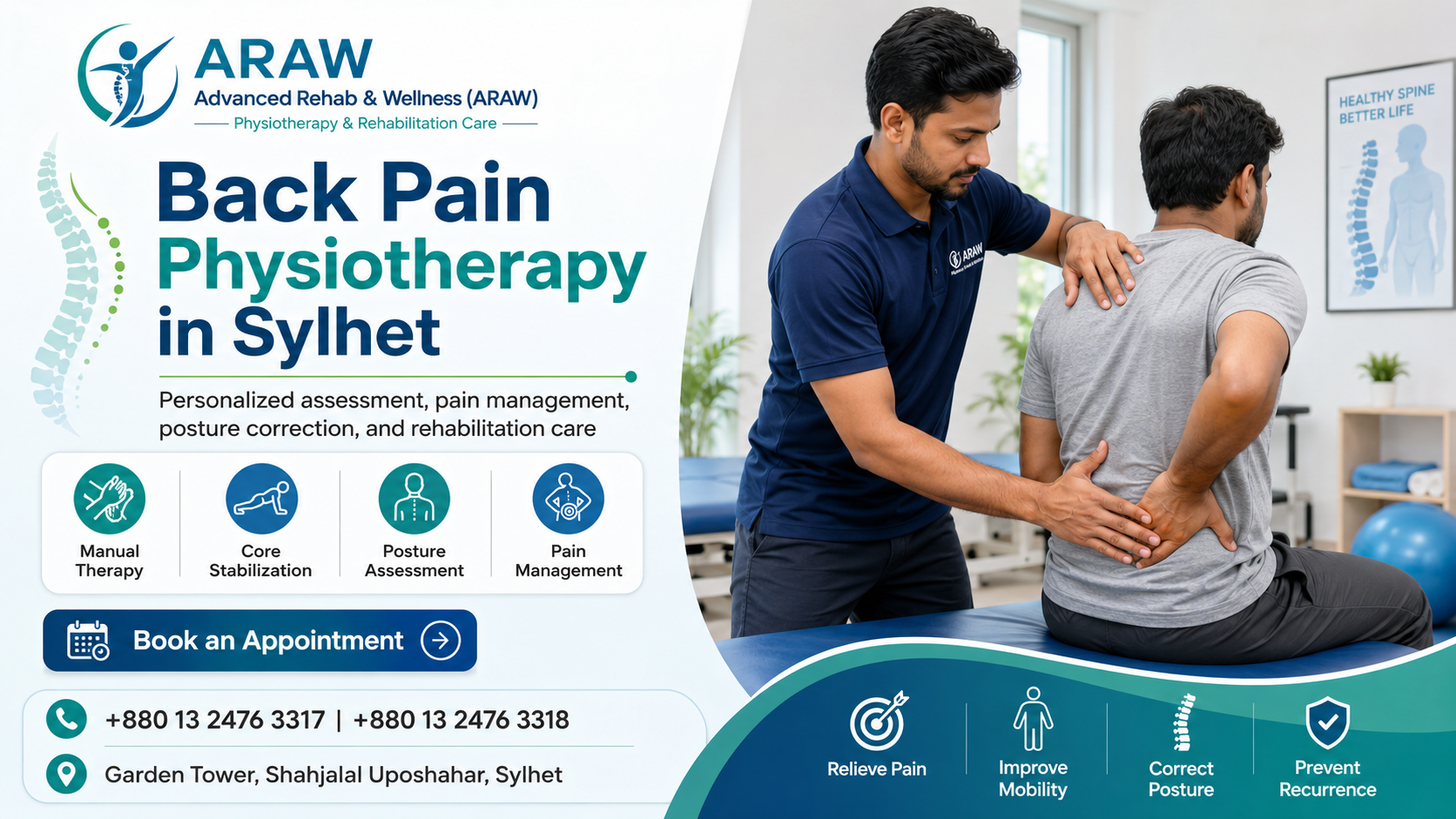
Looking for back pain physiotherapy in Sylhet? Advanced Rehab & Wellness provides personalized assessment, therapeutic exercise, core stabilization, posture correction, manual therapy, and pain-management support.

Back pain physiotherapy in Sylhet

Back pain can affect almost every part of daily life. It can make sitting at a desk, getting out of bed, driving, walking, lifting, exercising, or sleeping comfortably much more difficult. While some episodes improve naturally, persistent or recurring symptoms often need a professional assessment.

People searching for back pain physiotherapy in Sylhet usually want more than temporary relief. They want to understand why the pain keeps returning, which movements are safe, and what they can do to regain strength and confidence.

Advanced Rehab & Wellness, also known as ARAW, provides physiotherapy and pain-management services in Shahjalal Uposhahar, Sylhet. Its published physiotherapy service focuses on joint mechanics, core stability, movement, posture, and physical rehabilitation. Available approaches include mobility assessment, manual joint techniques, therapeutic exercise, electrotherapy, ultrasound, core stabilization, and workplace ergonomics.

This guide explains how back pain physiotherapy in Sylhet may support recovery, what causes back pain, which treatments may be used, and what patients can expect when visiting ARAW.

What Is Back Pain?

Back pain refers to aching, stiffness, burning, tightness, or sharp discomfort affecting the muscles, joints, nerves, discs, or other structures around the spine.

It may occur in the:

  • Lower back
  • Middle back
  • Upper back
  • Buttocks
  • Hip area
  • One or both legs

The World Health Organization defines lower back pain as pain between the lower edge of the ribs and the buttocks. It may be acute, subacute, or chronic and can affect people at any age.

Back pain may also restrict movement, affect sleep, reduce work performance, and make social or family activities harder. This is why timely back pain physiotherapy in Sylhet may be valuable when symptoms begin interfering with normal life.

Types of Back Pain

Acute back pain

Acute pain usually lasts for less than six weeks. It may begin after lifting, bending, falling, exercising, or making a sudden movement.

Many acute episodes improve with time. However, severe pain, progressive weakness, significant trauma, or other warning signs require medical assessment.

Subacute back pain

Subacute pain generally continues for six to twelve weeks. At this stage, a structured physiotherapy and rehabilitation plan may help restore movement and prevent unnecessary physical decline.

Chronic back pain

Chronic back pain continues for more than twelve weeks or repeatedly returns over an extended period.

Long-term pain may affect:

  • Work
  • Sleep
  • Mood
  • Mobility
  • Exercise
  • Family responsibilities
  • Physical confidence
  • Quality of life

WHO identifies lower back pain as the leading cause of disability worldwide and states that rehabilitation is essential for helping people understand their pain, return to meaningful activities, and improve physical function.

Why Consider Back Pain Physiotherapy in Sylhet?

Back pain is not the same for every patient. Two people may feel pain in the same area but have completely different contributing factors.

One person may develop pain after lifting a heavy object. Another may experience symptoms after months of prolonged desk work. Someone else may have pain travelling into the leg because of nerve irritation.

Professional back pain physiotherapy in Sylhet can help assess:

  • When the pain started
  • Where the pain is located
  • Which movements make it worse
  • Which positions reduce it
  • Whether it travels into a leg
  • Whether numbness or weakness is present
  • How posture affects the symptoms
  • Whether muscle weakness is contributing
  • How the pain affects daily activities
  • Whether medical referral is needed

A physiotherapist may also evaluate strength, flexibility, posture, balance, spinal movement, walking, and functional activities before creating a treatment plan.

Common Causes of Back Pain

Muscle strain

A back muscle may be strained during heavy lifting, exercise, physical work, or sudden twisting.

Symptoms may include:

  • Localized pain
  • Muscle tightness
  • Spasm
  • Stiffness
  • Difficulty bending
  • Pain during movement

A physiotherapist can assess the injury and recommend appropriate activity, exercise, and recovery strategies.

Prolonged sitting

Office workers, drivers, freelancers, students, and other people who remain seated for long periods may develop back discomfort.

The problem may be influenced by:

  • Limited movement
  • Poor workstation arrangement
  • Reduced muscle endurance
  • Repetitive posture
  • Lack of physical activity
  • Inadequate movement breaks

Back pain physiotherapy in Sylhet may include posture assessment, ergonomic advice, strengthening, and practical movement strategies for the workplace.

Incorrect lifting techniques

Lifting an object while bending, reaching, or twisting awkwardly can place additional strain on the back.

Repeated lifting may be particularly challenging for:

  • Construction workers
  • Shop employees
  • Healthcare workers
  • Drivers
  • Delivery workers
  • Agricultural workers
  • Parents lifting children

A physiotherapist may demonstrate safer techniques and prescribe exercises based on the patient’s physical demands.

Reduced core strength

The muscles around the abdomen, pelvis, hips, and lower back help support movement.

Reduced strength or poor muscle coordination may affect:

  • Sitting
  • Standing
  • Lifting
  • Walking
  • Exercise
  • Household work
  • Job-related activities

ARAW lists kinetic core stabilization among its physiotherapy and pain-management approaches. The exercises are intended to support important load-bearing areas and improve movement control.

Joint stiffness

Restricted spinal or hip movement may contribute to stiffness and difficulty completing normal activities.

A physiotherapy assessment may examine joint range, muscle flexibility, and movements that increase or reduce the symptoms.

Disc-related conditions

The discs between the bones of the spine help absorb load and allow movement. Some disc-related conditions may cause back pain, leg pain, numbness, or tingling.

However, an imaging result should not be interpreted without considering the patient’s symptoms and clinical assessment. Not every change visible on a scan is necessarily responsible for the pain.

Sciatica and nerve irritation

Sciatica commonly refers to pain related to irritation or compression of a nerve connected to the sciatic nerve.

Symptoms may include:

  • Pain travelling into the buttock or leg
  • Burning pain
  • Electric-shock sensations
  • Tingling
  • Numbness
  • Leg weakness

WHO notes that spine-related leg pain may involve sharp or electric sensations, numbness, tingling, or weakness.

Patients seeking back pain physiotherapy in Sylhet for sciatica should receive an appropriate assessment before beginning exercises or hands-on treatment.

Arthritis and age-related changes

Arthritis and age-related spinal changes may contribute to stiffness, reduced movement, and physical limitations.

Physiotherapy cannot reverse every structural change. However, a suitable program may help selected patients improve strength, mobility, balance, activity tolerance, and independence.

Sports injuries

Football, cricket, running, cycling, gym training, and other activities may place repeated or sudden loads on the back.

Sports-related back pain may result from:

  • Muscle strain
  • Overtraining
  • Reduced flexibility
  • Poor movement control
  • Inadequate recovery
  • Incorrect technique
  • Returning to sport too quickly

A physiotherapist may create a gradual rehabilitation and return-to-activity plan.

Back Pain Physiotherapy in Sylhet at ARAW

Advanced Rehab & Wellness provides physiotherapy and pain-management care for acute injuries, persistent pain, joint stiffness, posture-related problems, and reduced mobility.

ARAW states that its physiotherapy service looks beyond temporary surface-level relief by considering joint mechanics, core stability, deep-tissue concerns, and movement function.

Treatment should be personalized. A program for a recent muscle strain will be different from a plan for chronic pain, sciatica, post-surgical weakness, or age-related mobility limitations.

What Happens During the Initial Assessment?

The first stage of back pain physiotherapy in Sylhet should be a detailed consultation and physical examination.

The physiotherapist may ask:

  • When did the pain begin?
  • Was there an injury?
  • Where is the pain located?
  • Does it travel into the leg?
  • Is there numbness or tingling?
  • What movements increase the pain?
  • What positions provide relief?
  • Does the pain affect sleep?
  • What type of work do you perform?
  • Have you received treatment before?
  • Do you have any other medical conditions?

The physical examination may assess:

  • Spinal movement
  • Muscle strength
  • Flexibility
  • Posture
  • Balance
  • Walking pattern
  • Hip movement
  • Functional activities
  • Nerve-related symptoms

Physiotherapy assessments commonly include reviewing symptoms, medical history, lifestyle, strength, balance, and the affected area before treatment options are discussed.

Personalized Physiotherapy Treatment

After the assessment, a physiotherapist may create a personalized plan based on the patient’s symptoms, physical condition, lifestyle, and recovery goals.

The plan may include:

  • Therapeutic exercise
  • Core stabilization
  • Manual therapy
  • Mobility training
  • Posture correction
  • Activity modification
  • Ergonomic advice
  • Home exercises
  • Pain-management education
  • Gradual return to work or exercise

The exact combination will depend on the individual assessment.

Therapeutic Exercise for Back Pain

Exercise is often an important component of back pain physiotherapy in Sylhet.

Depending on the condition, exercises may focus on:

  • Improving spinal mobility
  • Strengthening the core
  • Improving hip strength
  • Increasing flexibility
  • Building endurance
  • Improving balance
  • Correcting movement patterns
  • Increasing sitting tolerance
  • Supporting lifting ability
  • Returning to normal activity

WHO includes physical therapies that improve muscle strength, movement, and the ability to resume physical activity among the management options for non-specific lower back pain.

Exercises should be introduced gradually. Patients should avoid copying random online routines because an exercise suitable for one condition may worsen another.

Core Stabilization

Core stabilization aims to improve the strength and coordination of muscles around the abdomen, pelvis, hips, and lower back.

A physiotherapist may select exercises that support:

  • Better movement control
  • Improved lifting
  • Increased standing tolerance
  • Safer bending
  • Improved balance
  • Better walking
  • Greater physical confidence

ARAW specifically lists kinetic core stabilization within its physiotherapy service.

Core exercises should be matched to the patient’s ability. A person experiencing severe pain or nerve symptoms may require a different starting point from someone returning to sport.

Manual Therapy and Joint Mobilization

Manual therapy involves hands-on techniques used by trained professionals to address restricted movement and support physical rehabilitation.

ARAW lists controlled manual joint mobilization as part of its physiotherapy and pain-management service.

Manual therapy may be combined with exercise, education, and movement training. It should not automatically be used for every patient, and it should not replace a complete assessment.

The NHS also identifies manual therapy and physiotherapy as possible treatment options when back pain does not improve after several weeks.

Posture and Spinal Assessment

Posture is only one possible factor in back pain. There is no single perfect posture that everyone must maintain throughout the day.

However, repeatedly remaining in an uncomfortable position or using a poorly arranged workstation may contribute to symptoms in some people.

A posture assessment may consider:

  • Sitting position
  • Standing alignment
  • Screen height
  • Chair support
  • Keyboard placement
  • Repeated movements
  • Lifting technique
  • Spinal mobility
  • Work breaks

ARAW offers spine and posture assessment as well as a desk-ergonomics service for people experiencing work-related physical concerns.

This makes workplace guidance a useful part of back pain physiotherapy in Sylhet for office workers, drivers, teachers, students, and freelancers.

Electrotherapy and Ultrasound

ARAW lists electrotherapy and therapeutic ultrasound among the physical modalities available through its physiotherapy and pain-management service.

These treatments may be considered for selected patients. However, they should generally be part of a broader rehabilitation plan rather than the only form of care.

A complete program should also consider:

  • Movement
  • Strength
  • Functional limitations
  • Patient education
  • Home activity
  • Long-term self-management

Home Exercise Program

Patients may receive exercises to complete between appointments.

A home program may support:

  • Regular movement
  • Strength development
  • Flexibility
  • Better posture habits
  • Confidence
  • Long-term symptom management

The NHS notes that physiotherapy patients may receive exercises to perform between sessions and that regular participation can support recovery.

Patients should perform only the prescribed exercises and tell the physiotherapist if they experience severe pain, new numbness, progressive weakness, dizziness, or unusual symptoms.

How Many Physiotherapy Sessions Are Needed?

There is no universal number of sessions for back pain physiotherapy in Sylhet.

Treatment duration may depend on:

  • Cause of pain
  • Duration of symptoms
  • Severity
  • Presence of leg pain
  • Muscle strength
  • Joint mobility
  • Age
  • General health
  • Work demands
  • Previous injuries
  • Attendance
  • Home-exercise participation
  • Response to treatment

ARAW states that many soft-tissue or spinal-tracking concerns may show baseline functional improvement within four to six focused sessions. This is the center’s published general guidance, not a guaranteed result for every patient.

Long-term pain, neurological symptoms, post-surgical conditions, or significant weakness may require a longer rehabilitation plan.

Benefits of Back Pain Physiotherapy

An appropriately designed physiotherapy program may help suitable patients:

  • Improve spinal movement
  • Increase muscle strength
  • Reduce stiffness
  • Improve flexibility
  • Develop safer movement habits
  • Return to work
  • Resume exercise
  • Improve sitting tolerance
  • Improve walking ability
  • Learn safer lifting techniques
  • Increase physical confidence
  • Manage recurring symptoms

Physiotherapy is commonly used for bone, joint, and muscle concerns such as back pain, neck pain, arthritis, sports injuries, and post-surgical weakness.

How to Support Recovery at Home

Remain appropriately active

Long periods of bed rest are generally not recommended for ordinary back pain. Remaining active and continuing daily activities within safe limits may support recovery.

Take regular movement breaks

Avoid remaining in one position for several hours. Stand, walk, or change position regularly when possible.

Follow the prescribed exercises

Perform exercises according to the physiotherapist’s instructions. Do not increase repetitions or resistance without guidance.

Improve your workstation

Adjust your chair, screen, keyboard, and desk to reduce unnecessary reaching, leaning, or twisting.

Use safer lifting techniques

Keep objects close to your body, avoid sudden twisting, and request assistance when an item is too heavy.

Get adequate sleep

Poor sleep may make pain more difficult to manage. Speak with a healthcare professional if pain consistently interrupts sleep.

Avoid unsupervised manipulation

Do not attempt forceful spinal manipulation or aggressive stretching without professional advice.

When Should You Seek Professional Care?

Consider arranging back pain physiotherapy in Sylhet when the pain:

  • Continues for several weeks
  • Keeps returning
  • Limits work or daily activities
  • Makes sitting or walking difficult
  • Interrupts sleep
  • Spreads into a leg
  • Causes numbness or tingling
  • Develops after an injury
  • Gradually becomes worse
  • Does not improve with appropriate self-care

The NHS advises seeking professional care when pain does not improve after a few weeks, limits everyday activities, becomes worse at night, or causes significant concern.

Warning Signs Requiring Urgent Medical Care

Back pain sometimes requires emergency medical attention rather than a routine physiotherapy appointment.

Seek urgent medical care when back pain is accompanied by:

  • Weakness or numbness in both legs
  • Loss of feeling around the genitals or anus
  • Difficulty controlling the bladder or bowel
  • Difficulty urinating
  • Severe pain after a major accident
  • Chest pain
  • Rapidly worsening weakness
  • Fever or feeling seriously unwell
  • Severe pain that begins suddenly and worsens quickly

These symptoms may indicate a serious condition and should not wait for a routine back pain physiotherapy in Sylhet appointment.

Why Choose Advanced Rehab & Wellness?

People looking for back pain physiotherapy in Sylhet may consider ARAW because it offers physiotherapy within a wider rehabilitation and pain-management setting.

Its published services include:

  • Physiotherapy and pain management
  • Manual joint mobilization
  • Kinetic core stabilization
  • Electrotherapy
  • Therapeutic ultrasound
  • Spine and posture assessment
  • Workplace ergonomics
  • Personalized treatment planning
  • Follow-up monitoring
  • Neuro rehabilitation
  • Stroke rehabilitation

ARAW describes its overall care process as appointment scheduling, initial consultation, personalized treatment planning, and follow-up support.

Frequently Asked Questions

Where can I receive back pain physiotherapy in Sylhet?

Advanced Rehab & Wellness provides physiotherapy and pain-management services at Garden Tower, Shahjalal Uposhahar, Sylhet. Its listed services include manual joint techniques, core stabilization, posture evaluation, electrotherapy, ultrasound, and ergonomic support.

Can physiotherapy help lower back pain?

Physiotherapy may help suitable patients improve movement, muscle strength, flexibility, and physical function. Treatment should be selected after an individual assessment.

Can physiotherapy help sciatica?

Physiotherapy may be included in a treatment plan for some people with sciatica. The approach depends on the cause, severity, weakness, numbness, and other assessment findings.

Do I need an MRI before physiotherapy?

Not every patient needs an MRI before beginning physiotherapy. A healthcare professional may recommend imaging when examination findings, trauma, progressive symptoms, or warning signs suggest that it is necessary.

Is bed rest recommended for back pain?

Extended bed rest is generally discouraged for ordinary back pain. Patients are commonly advised to remain appropriately active unless a healthcare professional gives different instructions.

Is back pain physiotherapy painful?

Some movements may cause temporary discomfort when muscles or joints are stiff. Treatment should not cause uncontrolled or severe pain. Tell the physiotherapist immediately if symptoms significantly increase.

Can office workers benefit from physiotherapy?

Yes. Office workers experiencing back pain may benefit from movement assessment, strengthening, posture guidance, workstation modification, and regular movement strategies.

How soon can I expect improvement?

Recovery time depends on the cause, duration, severity, general health, attendance, home exercises, and individual response. A responsible provider should not guarantee the same recovery time for every patient.

Do I need a doctor’s prescription?

ARAW states that its clinical therapists provide direct-entry screening. However, patients with significant trauma, serious medical conditions, or warning signs may require consultation with a doctor or another specialist.

What are the physiotherapy hours at ARAW?

ARAW currently publishes physiotherapy and pain-management hours from Saturday to Wednesday, from 9:00 AM to 2:00 PM and from 4:00 PM to 9:00 PM. Patients should confirm availability before travelling.

Book Back Pain Physiotherapy in Sylhet

Back pain should not prevent you from working, sleeping, exercising, or completing everyday activities without seeking appropriate help.

A professional assessment can identify physical limitations, contributing factors, safety concerns, and suitable rehabilitation options. Depending on the findings, treatment may include therapeutic exercise, core stabilization, manual joint techniques, posture guidance, ergonomic adjustments, and a personalized home program.

For people searching for back pain physiotherapy in Sylhet, Advanced Rehab & Wellness provides local access to physiotherapy, pain management, mobility assessment, and rehabilitation services.

Contact ARAW to discuss your symptoms and schedule an initial assessment.

Contact Advanced Rehab & Wellness

Advanced Rehab & Wellness—ARAW

Address:
Shahjalal City College Building
Garden Tower, Shahjalal Uposhahar
Sylhet, Bangladesh

Appointment Numbers:
+880 13 2476 3317
+880 13 2476 3318

Email:
arawsylhet@gmail.com

Published Physiotherapy Schedule:
Saturday–Wednesday: 9:00 AM–2:00 PM
Saturday–Wednesday: 4:00 PM–9:00 PM

These contact and location details are currently published on ARAW’s official website. Patients should confirm the schedule and service availability before visiting.

Medical Disclaimer

This article is provided for general education and information only. It is not a medical diagnosis, prescription, or guarantee of treatment results. Back pain can have many possible causes, and treatment should be selected after an appropriate assessment by a qualified healthcare professional. Seek urgent medical care for bladder or bowel changes, numbness around the groin, weakness in both legs, severe trauma, chest pain, or other emergency symptoms.

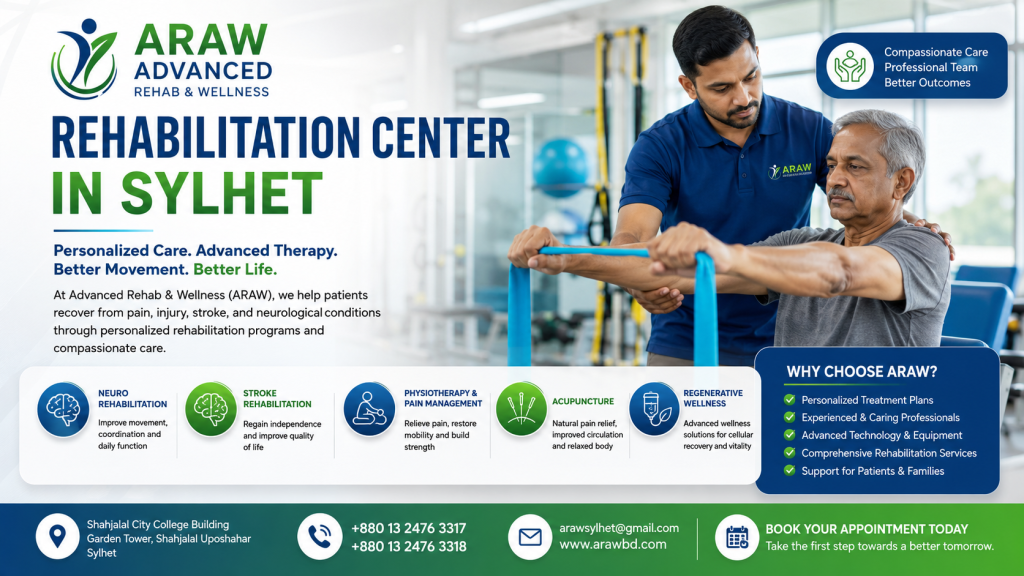
Looking for a rehabilitation center in Sylhet? Discover personalized neuro rehabilitation, stroke rehabilitation, physiotherapy, pain management, acupuncture, and wellness care at Advanced Rehab & Wellness.

Physical rehabilitation center in Sylhet, neuro rehabilitation in Sylhet, stroke rehabilitation in Sylhet, physiotherapy center in Sylhet, pain management center in Sylhet, rehabilitation clinic in Sylhet.

Rehabilitation center in Sylhet

Recovering from a stroke, neurological condition, physical injury, surgery, mobility problem, or long-term pain can be a difficult journey. Medical treatment may stabilize a condition, but many patients need structured rehabilitation to regain movement, improve strength, manage pain, and return to everyday activities.

For individuals and families searching for a professional rehabilitation center in Sylhet, Advanced Rehab & Wellness—also known as ARAW—provides a range of rehabilitation and wellness services in Shahjalal Uposhahar, Sylhet.

The center’s listed services include neuro rehabilitation, stroke rehabilitation, physiotherapy and pain management, acupuncture, and regenerative wellness. ARAW describes its approach as patient-focused, combining personalized treatment planning with modern healthcare technology and professional supervision.

This article explains what rehabilitation means, who may need it, what services are available at ARAW, and what patients should consider when choosing a rehabilitation center in Sylhet.

What Is a Rehabilitation Center?

A rehabilitation center is a healthcare facility that helps people improve their ability to move, communicate, work, care for themselves, and participate in everyday life after an illness, injury, operation, or disabling health condition.

The World Health Organization defines rehabilitation as a group of interventions designed to improve functioning and reduce disability. Rehabilitation can help children, adults, and older people become as independent as possible in their daily activities.

Rehabilitation is not limited to athletes or people with permanent disabilities. It may benefit someone who is:

  • Recovering after a stroke
  • Living with a neurological condition
  • Experiencing weakness or balance problems
  • Recovering after an accident or surgery
  • Managing chronic back, neck, or joint pain
  • Experiencing difficulty walking
  • Trying to regain strength after prolonged illness
  • Living with reduced mobility because of age
  • Managing a musculoskeletal injury
  • Experiencing difficulty with coordination or daily activities

The purpose of rehabilitation is not simply to treat a diagnosis. Its broader goal is to help the patient function more safely and independently at home, at work, and in the community.

Why Rehabilitation Is Important

Many health conditions continue to affect a patient even after emergency care or medical treatment has ended. A person may survive a stroke but still experience weakness, speech difficulty, poor balance, stiffness, swallowing problems, or challenges completing basic activities.

Similarly, someone with a spinal, joint, muscle, or nerve condition may continue to experience pain and restricted movement without a structured recovery plan.

Rehabilitation can focus on practical outcomes such as:

  • Walking more safely
  • Improving balance
  • Increasing muscle strength
  • Reducing stiffness
  • Restoring joint movement
  • Improving hand coordination
  • Managing pain
  • Returning to work
  • Completing household activities
  • Building confidence
  • Reducing the risk of falls
  • Learning safe ways to perform daily tasks

According to the World Health Organization, rehabilitation expands healthcare beyond prevention and medical treatment by helping people remain independent and participate in meaningful areas of life, including education, employment, family responsibilities, and recreation.

Who May Need a Rehabilitation Center in Sylhet?

A patient does not necessarily need to be completely unable to walk before seeking rehabilitation. Early assessment may be helpful whenever a health problem begins to affect movement, balance, strength, coordination, comfort, or independence.

A rehabilitation assessment may be considered for people experiencing the following conditions or symptoms.

Stroke-related difficulties

A stroke can affect movement, speech, swallowing, memory, balance, coordination, and the ability to complete daily activities. Rehabilitation may help patients work toward recovering lost abilities and learning new ways to perform essential tasks.

Neurological conditions

Conditions affecting the brain, spinal cord, or nerves may create weakness, tremors, poor coordination, difficulty walking, muscle stiffness, or loss of fine motor skills.

Back and neck pain

Persistent back or neck pain can affect sleep, work, exercise, driving, and daily mobility. A rehabilitation program may include assessment, therapeutic exercise, posture education, movement training, and other appropriate interventions.

Joint and muscle problems

Arthritis, sports injuries, sprains, muscle weakness, joint stiffness, and repetitive strain conditions may benefit from physiotherapy and progressive rehabilitation.

Post-surgical recovery

After certain operations, patients may need help rebuilding movement, strength, flexibility, endurance, and confidence.

Balance and walking difficulties

Older adults and people recovering from neurological or physical conditions may experience poor balance or an increased risk of falling. Structured balance and gait training can help improve safety.

Long-term pain

Persistent pain may require more than temporary pain relief. Rehabilitation can help patients understand their condition, manage activity, improve movement, and work toward functional goals.

Physiotherapy is commonly used to improve movement and ease pain associated with injuries, illnesses, disabilities, joint conditions, back pain, sports injuries, stroke, neurological conditions, and post-operative weakness.

Advanced Rehab & Wellness: A Rehabilitation Center in Sylhet

Advanced Rehab & Wellness is located in Garden Tower, Shahjalal Uposhahar, Sylhet. The center presents itself as a patient-focused healthcare facility offering rehabilitation, physiotherapy, pain management, acupuncture, and wellness services.

Its website emphasizes clear communication, personalized treatment plans, advanced healthcare technology, and ongoing patient support.

Instead of using the same treatment plan for every patient, rehabilitation should be based on the person’s condition, limitations, daily responsibilities, recovery goals, medical history, and response to therapy.

At ARAW, the published patient journey includes four main stages:

  1. Scheduling an appointment
  2. Receiving an initial consultation and assessment
  3. Starting a personalized treatment plan
  4. Continuing with follow-up care and progress monitoring

This structured process is designed to move the patient from initial evaluation to ongoing recovery support.

Rehabilitation Services Available at ARAW

1. Neuro Rehabilitation in Sylhet

Neuro rehabilitation is designed for people whose movement, balance, coordination, cognition, or daily functioning has been affected by a neurological disease or injury.

ARAW’s neuro rehabilitation service focuses on helping patients recover, adapt, and regain independence. The program includes movement-based and sensory-focused activities intended to support motor, cognitive, and functional abilities.

The neuro rehabilitation services described by ARAW include:

Neuroplasticity-focused exercises

Neuroplasticity refers to the nervous system’s capacity to adapt and reorganize. Therapeutic activities may be used to repeatedly practise specific movements and improve coordination.

Balance and gait training

Patients with neurological conditions may have difficulty standing, walking, changing direction, or maintaining balance. Balance and gait activities can focus on safer mobility and fall prevention.

Fine motor coordination

Fine motor rehabilitation may include activities for the hands, fingers, and wrists. These skills are important for writing, holding objects, eating, dressing, using a phone, and performing other daily tasks.

Individual neurological assessment

A detailed assessment helps identify a patient’s current abilities, limitations, reflexes, movement patterns, and functional goals. The findings can then guide an individualized rehabilitation plan.

Neuro rehabilitation may be relevant for patients recovering from or living with neurological conditions, but the appropriate treatment depends on medical clearance and individual clinical assessment.

2. Stroke Rehabilitation in Sylhet

Stroke rehabilitation is one of the most important forms of rehabilitation care. The effects of a stroke vary widely. One patient may experience weakness on one side of the body, while another may have difficulty speaking, swallowing, balancing, remembering instructions, or completing everyday activities.

ARAW’s stroke rehabilitation pathway lists physical, occupational, speech-related, mobility, and functional adaptation support. The service focuses on concerns such as muscle weakness, spasticity, affected-limb movement, speech barriers, swallowing difficulties, and loss of independence.

A stroke rehabilitation program may involve the following areas.

Movement retraining

Repeated, goal-directed movement exercises may help a patient practise using an affected arm or leg.

Balance and walking practice

Therapy may focus on sitting balance, standing, transferring between surfaces, walking with support, and gradually improving safe mobility.

Spasticity management

Some stroke survivors experience increased muscle tightness or involuntary stiffness. Appropriate stretching, positioning, movement, and medically supervised interventions may help manage these problems.

Speech and swallowing support

A stroke can affect speech, voice, language, and swallowing. These problems require evaluation by suitably qualified healthcare professionals.

Daily activity training

The patient may need to relearn or adapt activities such as dressing, bathing, eating, using the toilet, preparing food, and moving safely around the home.

Caregiver involvement

Family members often play an important role in stroke recovery. ARAW states that its stroke rehabilitation service can include family and caregiver guidance to support the patient’s transition into everyday life.

Recovery after a stroke is different for every individual. Some patients improve rapidly, while others require longer-term rehabilitation. A realistic program should be based on assessment, consistent practice, safety, and measurable functional goals.

3. Physiotherapy and Pain Management in Sylhet

Physiotherapy can support people experiencing pain, weakness, stiffness, reduced mobility, poor posture, joint problems, sports injuries, and post-surgical limitations.

ARAW’s physiotherapy and pain management service focuses on musculoskeletal biomechanics, joint movement, core stability, mobility, and soft-tissue-related problems. The website lists manual joint techniques, electrotherapy, ultrasound, core-stabilization exercises, posture assessment, and ergonomics-focused support among its available approaches.

Depending on the patient’s condition, a physiotherapy program may include:

  • Movement assessment
  • Posture evaluation
  • Range-of-motion exercises
  • Strengthening exercises
  • Core stability training
  • Balance activities
  • Stretching
  • Manual therapy
  • Pain education
  • Workplace ergonomics
  • Home exercise guidance
  • Progressive return to normal activity

Physiotherapy should not be based only on where the patient feels pain. A proper assessment may also examine movement habits, muscle weakness, joint mobility, posture, activity level, previous injuries, work demands, and lifestyle factors.

The number of sessions required varies. A minor injury may improve relatively quickly, while neurological conditions, long-term pain, major surgery, or severe weakness may require a longer rehabilitation period.

4. Acupuncture Services

ARAW also lists clinical acupuncture among its services. Its published approach includes the use of sterile, single-use needles placed at selected points, with options such as electro-acupuncture, dry needling for trigger points, and auricular point techniques.

Acupuncture or dry needling may be considered as one part of a wider treatment plan for selected patients. It should be provided by an appropriately trained professional after reviewing the patient’s health condition, medications, medical history, and treatment goals.

Patients should inform the practitioner about:

  • Pregnancy
  • Bleeding disorders
  • Blood-thinning medication
  • Skin infection
  • Pacemakers or implanted electrical devices
  • Fainting episodes
  • Previous reactions to needling

Acupuncture should not replace urgent medical treatment or an appropriately prescribed rehabilitation program.

5. Regenerative Wellness

ARAW’s website also presents a regenerative wellness service focusing on cellular recovery, nutritional support, hydration, tissue-repair modalities, metabolic screening, and wellness planning.

Because regenerative and infusion-based treatments may not be suitable for every individual, patients should receive a qualified medical assessment and clear information about:

  • The exact treatment being recommended
  • Why it is being recommended
  • Possible benefits
  • Potential risks
  • Available alternatives
  • Expected cost
  • Required follow-up
  • The professional qualifications of the provider

No treatment should be considered a guaranteed cure. Rehabilitation and wellness outcomes depend on the diagnosis, severity of the condition, general health, consistency, and individual response.

The Importance of a Personalized Rehabilitation Plan

Two patients with the same diagnosis may have very different needs.

For example, two stroke survivors may both have weakness on the left side. However, one may need help returning to office work, while the other may need to regain the ability to walk safely inside the home.

A personalized rehabilitation plan should consider:

  • Medical diagnosis
  • Severity of the condition
  • Pain level
  • Muscle strength
  • Joint mobility
  • Balance
  • Walking ability
  • Hand function
  • Communication ability
  • Home environment
  • Occupation
  • Family support
  • Personal goals
  • Existing health conditions

The treatment plan should also be reviewed regularly. Exercises and interventions may need to change as the patient improves or as new challenges become apparent.

What to Expect During Your First Rehabilitation Visit

Patients visiting a rehabilitation center in Sylhet for the first time may feel uncertain about what will happen. A typical first appointment may include several stages.

Discussion of the main problem

The healthcare professional may ask when the problem began, what makes it better or worse, and how it affects daily life.

Medical history review

The patient should provide information about previous illnesses, operations, accidents, medications, test reports, and existing medical conditions.

Physical and functional assessment

Depending on the condition, the assessment may examine:

  • Muscle strength
  • Joint movement
  • Posture
  • Balance
  • Walking
  • Coordination
  • Reflexes
  • Pain behaviour
  • Ability to complete daily tasks

Goal setting

The patient and professional may identify practical goals. A goal might be walking to the bathroom safely, climbing stairs, returning to work, using an affected hand, or sitting comfortably for a certain period.

Treatment planning

After the assessment, the professional may explain the recommended treatment, approximate frequency of visits, home exercises, precautions, and progress measures.

Patients should bring relevant prescriptions, imaging reports, discharge papers, laboratory reports, medication lists, and previous therapy records to the appointment.

How to Choose the Right Rehabilitation Center in Sylhet

Choosing a rehabilitation center is an important healthcare decision. Patients and families should evaluate more than advertisements or pricing.

Qualified healthcare professionals

Check whether the center has professionals with relevant education, training, registration, and experience.

ARAW’s website currently lists Professor Dr. N M Kiron as an acupuncture specialist and Dr. Fatema Zohra Akhand under Physical Medicine and Rehabilitation. Patients may request further information about the professional who will assess or treat their particular condition.

Detailed assessment

A responsible rehabilitation center should assess the patient before beginning a treatment program. Treatment should not be selected only from a symptom description over the phone.

Individualized care

The program should reflect the patient’s diagnosis, current abilities, lifestyle, and goals.

Clear communication

Patients should understand what treatment is being provided, who is providing it, what it is intended to achieve, and whether there are risks or alternatives.

Measurable progress

Progress may be tracked through improvements in strength, walking distance, balance, range of motion, pain-related function, or the ability to complete daily activities.

Safe and accessible environment

A rehabilitation center should be reasonably accessible for patients with wheelchairs, walking aids, weakness, or balance difficulties.

Family education

For stroke, neurological conditions, and older patients, family members may need guidance about safe transfers, positioning, home exercises, and fall prevention.

Follow-up support

Rehabilitation is a process. Follow-up appointments help the team review progress, update exercises, and respond to problems.

Why Choose a Local Rehabilitation Center in Sylhet?

Receiving care locally can make it easier for patients to attend sessions consistently. This is particularly important when rehabilitation requires repeated appointments over several weeks or months.

A rehabilitation center in Sylhet may provide practical advantages for local patients, including:

  • Reduced travel time
  • Easier caregiver participation
  • More consistent appointment attendance
  • Faster access to follow-up care
  • Better understanding of the patient’s home environment
  • Easier coordination with local doctors
  • Reduced physical strain from long-distance travel

For patients with major mobility limitations, even a simple journey can be exhausting. Selecting an accessible local center may make the rehabilitation process more manageable for both the patient and the family.

The Role of Family Members in Rehabilitation

Family involvement can significantly influence a patient’s daily rehabilitation experience. Therapists may see a patient for a limited period, but the family often provides support throughout the rest of the day.

Family members can help by:

  • Encouraging the patient without creating pressure
  • Following professional safety instructions
  • Supporting prescribed home exercises
  • Helping organize appointments
  • Monitoring changes in symptoms
  • Creating a safer home environment
  • Celebrating gradual progress
  • Allowing the patient to perform tasks independently when safe
  • Reporting new concerns to the healthcare team

Families should avoid forcing painful movements or introducing exercises that have not been recommended by a qualified professional.

How Long Does Rehabilitation Take?

There is no single rehabilitation timeline that applies to every patient.

The duration may depend on:

  • Type of illness or injury
  • Severity of impairment
  • Age and general health
  • Time between the health event and rehabilitation
  • Presence of other medical conditions
  • Frequency of treatment
  • Participation in home exercises
  • Family support
  • Personal goals
  • Individual response to therapy

Some musculoskeletal conditions may improve within a limited number of sessions. Stroke, spinal cord injury, neurological disease, major trauma, or severe deconditioning may require longer-term rehabilitation.

Patients should focus on functional progress rather than comparing their recovery with someone else’s.

Tips for Getting Better Results from Rehabilitation

Attend sessions consistently

Missing appointments may interrupt the progression of the treatment plan.

Follow the home program

Home exercises are often an essential part of rehabilitation. Perform only the exercises prescribed for your condition.

Report changes honestly

Tell the healthcare professional about increased pain, dizziness, unusual weakness, swelling, falls, breathing problems, or other changes.

Set realistic goals

Smaller goals can help patients recognize progress and remain motivated.

Ask questions

Patients should understand the purpose of each exercise or treatment.

Maintain healthy daily habits

Adequate sleep, nutrition, hydration, medication adherence, and appropriate activity may support the wider recovery process.

Avoid unapproved treatment changes

Do not stop prescribed medication, begin intense exercise, or use unverified therapies without consulting the appropriate medical professional.

Frequently Asked Questions About Rehabilitation Centers in Sylhet

What conditions are treated at a rehabilitation center?

A rehabilitation center may help patients recovering from stroke, neurological conditions, physical injury, surgery, muscle weakness, joint stiffness, mobility problems, balance difficulties, and persistent pain. Available services vary by facility.

Is rehabilitation only for stroke patients?

No. Rehabilitation may benefit people with many different illnesses, injuries, disabilities, pain conditions, and age-related functional problems.

Does ARAW provide stroke rehabilitation in Sylhet?

Yes. ARAW lists stroke rehabilitation as one of its core services, including support related to movement, spasticity, speech, swallowing, mobility, functional independence, and caregiver guidance.

Is neuro rehabilitation available at ARAW?

Yes. ARAW provides neuro rehabilitation services that include neurological assessment, coordination activities, balance and gait training, and fine motor exercises.

Does ARAW offer physiotherapy and pain management?

Yes. Its listed physiotherapy and pain management services include movement assessment, manual techniques, electrotherapy, ultrasound, core stabilization, posture evaluation, and ergonomics-focused care.

Do I need an assessment before starting rehabilitation?

An initial assessment is important because it allows the professional to understand your condition, identify functional limitations, review safety concerns, and prepare an appropriate treatment plan.

How many rehabilitation sessions will I need?

The number of sessions depends on your diagnosis, severity, goals, progress, and response to treatment. Ask the treating professional to review your progress regularly rather than guaranteeing a fixed recovery timeline.

Can family members participate?

Family involvement may be particularly helpful for stroke and neurological rehabilitation. ARAW states that caregiver and family guidance may be included in its stroke rehabilitation pathway.

What should I bring to my first appointment?

Bring medical prescriptions, test reports, X-rays or scans, hospital discharge papers, a list of medications, previous therapy records, and any walking aid or support device you currently use.

Where is Advanced Rehab & Wellness located?

Advanced Rehab & Wellness is located at Shahjalal City College Building, Garden Tower, Shahjalal Uposhahar, Sylhet. The center lists two appointment numbers: +880 13 2476 3317 and +880 13 2476 3318. Its published email address is arawsylhet@gmail.com. Patients should confirm the relevant service schedule before visiting.

Begin Your Recovery Journey at Advanced Rehab & Wellness

Recovery is not always immediate or straightforward. It may require professional assessment, consistent practice, family support, realistic goals, and regular review.

Choosing the right rehabilitation center in Sylhet can help patients access structured support close to home. Advanced Rehab & Wellness offers services covering neuro rehabilitation, stroke rehabilitation, physiotherapy and pain management, acupuncture, and regenerative wellness.

Whether you are recovering from a stroke, experiencing neurological movement problems, managing persistent pain, rebuilding strength after an injury, or trying to regain independence, the first step is an appropriate professional assessment.

Contact Advanced Rehab & Wellness to discuss your condition, confirm the suitable specialist, and schedule an appointment.

Advanced Rehab & Wellness

Address: Shahjalal City College Building, Garden Tower, Shahjalal Uposhahar, Sylhet
Phone: +880 13 2476 3317, +880 13 2476 3318
Email: arawsylhet@gmail.com

Medical Disclaimer

This article is provided for general educational and informational purposes. It is not a diagnosis, medical prescription, or substitute for consultation with a qualified healthcare professional. Treatment suitability, risks, expected outcomes, and rehabilitation duration vary from person to person. Seek emergency medical assistance for sudden weakness, facial drooping, difficulty speaking, severe chest pain, loss of consciousness, breathing difficulty, major trauma, or other urgent symptoms.