Looking for acupuncture treatment in Sylhet? Learn how acupuncture may support pain management, mobility, headaches, muscle tension, and rehabilitation at Advanced Rehab & Wellness.
Pain, stiffness, muscle tension, headaches, and reduced mobility can affect work, sleep, exercise, and everyday responsibilities. Some people improve with physiotherapy, medication, exercise, or lifestyle changes, while others may benefit from an additional complementary treatment as part of a broader care plan.
For people searching for acupuncture treatment in Sylhet, Advanced Rehab & Wellness, also known as ARAW, provides acupuncture alongside physiotherapy, pain management, neuro rehabilitation, stroke rehabilitation, and regenerative wellness services. ARAW is located at Garden Tower, Shahjalal Uposhahar, Sylhet. (Advanced Rehab & Wellness)
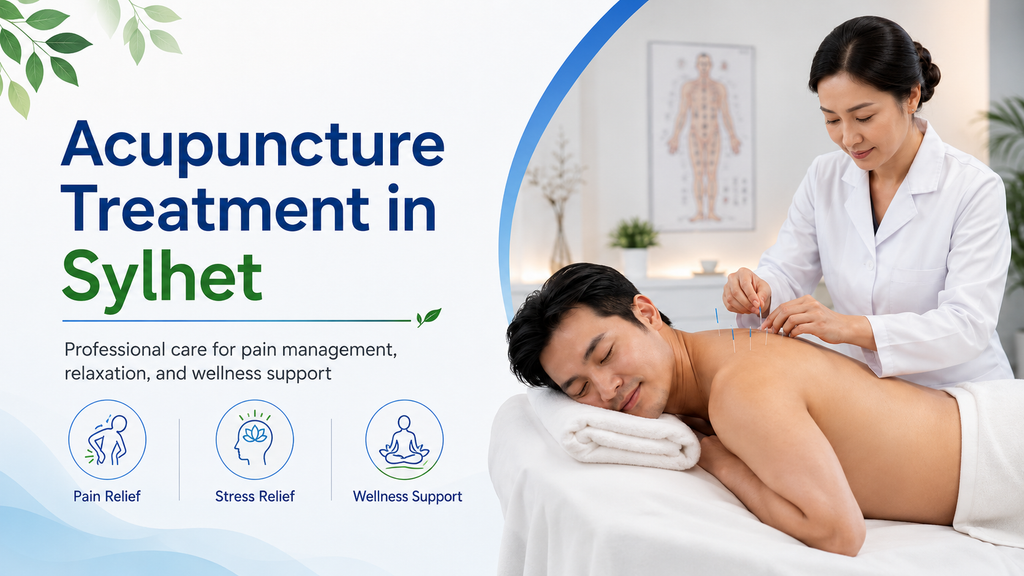
Acupuncture uses very fine needles inserted at selected points on the body. The needles may be gently manipulated by hand or stimulated with a low electrical current, a technique known as electro-acupuncture. (NCCIH)
This article explains how acupuncture works, which conditions it may help, what happens during a session, safety considerations, and what patients should know before booking acupuncture treatment in Sylhet.
What Is Acupuncture?
Acupuncture is a needling technique that originated within traditional Chinese medicine and is now used in many healthcare settings worldwide.
During treatment, a trained practitioner inserts thin needles through the skin at carefully selected points. Depending on the treatment plan, the practitioner may:
- Leave the needles in place for a limited period
- Rotate or gently move the needles
- Apply mild electrical stimulation
- Target trigger points or areas of muscle tension
- Combine acupuncture with physiotherapy or rehabilitation
Modern medical explanations suggest that needling may influence sensory nerves, muscles, connective tissue, pain-processing pathways, and natural pain-modulating chemicals. However, researchers do not yet fully understand every mechanism involved. Acupuncture is generally considered a complementary treatment rather than a replacement for necessary medical care. (NCCIH)
Why Do People Consider Acupuncture Treatment in Sylhet?
People often consider acupuncture when pain or stiffness continues despite rest, basic medication, or self-care.
Common reasons for seeking an assessment include:
- Lower-back pain
- Neck and shoulder pain
- Knee discomfort
- Muscle tightness
- Trigger points
- Arthritis-related pain
- Tension-type headaches
- Migraine symptoms
- Sports-related soreness
- Persistent musculoskeletal pain
- Stress-related physical tension
- Reduced movement after injury
Research evidence varies according to the condition. Evidence summarized by the U.S. National Center for Complementary and Integrative Health suggests that acupuncture may help some people with chronic back or neck pain and osteoarthritis-related pain. It should still be selected according to the individual patient’s condition and used within an appropriate care plan. (NCCIH)
Acupuncture at Advanced Rehab & Wellness
ARAW lists acupuncture among its principal healthcare services. The center also provides physiotherapy and pain management, neuro rehabilitation, stroke rehabilitation, and regenerative wellness. (Advanced Rehab & Wellness)
This broader rehabilitation environment may be useful because pain is not always managed effectively through one treatment alone. Depending on the assessment, a patient’s program may combine:
- Acupuncture
- Therapeutic exercise
- Physiotherapy
- Manual techniques
- Core stabilization
- Posture correction
- Mobility training
- Ergonomic guidance
- Home exercise
- Medical referral
A combined plan should be based on the patient’s diagnosis, medical history, symptoms, functional limitations, and recovery goals.
Conditions That May Benefit From Acupuncture
Back pain
Lower-back pain may result from muscle strain, prolonged sitting, reduced strength, joint stiffness, repetitive work, disc-related conditions, or nerve irritation.
Acupuncture may be considered as one part of a wider back-pain plan. The plan may also include exercise, movement education, physiotherapy, posture advice, and appropriate medical treatment.
Evidence reviewed by NCCIH indicates that acupuncture has shown benefits for some people with chronic back or neck pain when compared with no treatment or sham treatment. (NCCIH)
Acupuncture is not suitable as the only response when back pain is accompanied by major trauma, progressive weakness, bladder or bowel changes, or numbness around the groin. These symptoms require urgent medical assessment.
Neck and shoulder pain
Neck and shoulder discomfort may develop from:
- Prolonged computer use
- Mobile-phone use
- Muscle tension
- Poor workstation setup
- Joint stiffness
- Repetitive work
- Previous injury
- Stress-related muscle tightening
An acupuncture practitioner may target selected points or muscular trigger areas. However, a full treatment program may also need strengthening, posture correction, ergonomic changes, and mobility exercises.
Knee pain and osteoarthritis
Knee osteoarthritis can cause pain, morning stiffness, swelling, reduced walking ability, and difficulty climbing stairs.
Acupuncture may help some patients manage osteoarthritis-related pain. A review summarized by NCCIH found evidence of benefit compared with no treatment and, in some studies, sham acupuncture. (NCCIH)
However, acupuncture cannot rebuild severely damaged cartilage or guarantee avoidance of surgery. Patients with significant swelling, instability, trauma, or progressive disability should receive an appropriate medical and physical assessment.
Headaches and migraine
Some people use acupuncture as a complementary option for recurrent headaches or migraine.
Because headaches can have many causes, assessment is important. New, sudden, unusually severe, or neurologically associated headaches should be medically evaluated before acupuncture is considered.
Muscle tightness and trigger points
A trigger point is a sensitive area within a muscle that may produce local or referred discomfort.
Needling techniques may be used to address selected trigger points. This may sometimes be described as dry needling, although dry needling and traditional acupuncture are not identical in theory, training, or treatment selection.
Muscle tension may also require:
- Stretching
- Strengthening
- Posture correction
- Activity modification
- Manual therapy
- Workstation changes
Sports-related pain
Athletes may experience muscle strain, tendon irritation, joint discomfort, and delayed recovery after training.
Acupuncture may be considered as a supplementary treatment, but sports rehabilitation should also address:
- Strength
- Flexibility
- Movement control
- Training load
- Technique
- Recovery time
- Gradual return to sport
Chronic pain
Chronic pain is often influenced by a combination of physical, emotional, occupational, and lifestyle factors.
Acupuncture may be one component of a broader chronic-pain program. Other components may include physiotherapy, exercise, education, sleep support, stress management, and medication review.
What Is Electro-Acupuncture?
Electro-acupuncture involves connecting acupuncture needles to a device that delivers a mild electrical current.
The aim is to provide controlled stimulation at the selected points. The patient may notice a mild pulsing or tingling sensation.
ARAW publishes information about electro-acupuncture within its regenerative and joint-care services. (Advanced Rehab & Wellness)
Electro-acupuncture may not be appropriate for everyone. Patients should inform the practitioner if they have:
- A pacemaker
- An implanted electrical device
- Heart rhythm concerns
- Seizure disorders
- Pregnancy
- Reduced sensation
- A bleeding condition
- Significant medical illness
The practitioner should explain why electro-acupuncture is being recommended and whether a non-electrical alternative is available.
Acupuncture and Dry Needling: Are They the Same?
Acupuncture and dry needling both use thin needles, but they are not exactly the same.
Traditional acupuncture selects points according to an established acupuncture framework and may also be used within modern medical or integrative approaches.
Dry needling commonly focuses on muscles, trigger points, and neuromuscular structures. It is often provided within physiotherapy or musculoskeletal treatment.
Patients should ask:
- Which technique is being used?
- Why has it been selected?
- What training does the practitioner have?
- What results are realistically expected?
- What other treatments will be included?
What Happens During an Acupuncture Appointment?
1. Consultation and assessment
Before treatment, the practitioner should ask about:
- Main symptoms
- Pain location and duration
- Medical conditions
- Previous surgery
- Medication
- Allergies
- Pregnancy
- Bleeding disorders
- Heart conditions
- Previous reactions to needles
- Treatment goals
Patients should bring relevant medical reports, prescriptions, scans, and medication lists.
2. Treatment explanation
The practitioner should explain:
- Which areas will be treated
- How many needles may be used
- Whether electrical stimulation is planned
- How long the needles may remain in place
- Possible sensations
- Potential risks
- Alternative options
Patients should have the opportunity to ask questions and give informed consent.
3. Needle placement
The patient may sit or lie down. Thin needles are inserted into selected locations.
A brief pinching or tingling sensation may occur. Some patients experience heaviness, warmth, pressure, or a dull ache around the treatment point.
Severe or sharp pain should be reported immediately.
4. Treatment period
Needles may remain in place for a limited period. The exact time varies according to the technique and treatment plan.
5. Needle removal
The practitioner removes and safely disposes of the needles.
Sterile, single-use needles should be used to reduce infection risk.
6. Follow-up guidance
The patient may receive advice about:
- Hydration
- Exercise
- Activity levels
- Physiotherapy
- Home care
- Follow-up sessions
- Symptoms requiring medical attention
Does Acupuncture Hurt?
Most people describe acupuncture as producing mild or brief sensations rather than severe pain.
Possible sensations include:
- A short pinching feeling
- Tingling
- Mild pressure
- Warmth
- Heaviness
- A dull ache
Some people may experience minor soreness or bruising afterward.
Pain tolerance varies, and certain areas of the body may be more sensitive. Patients should tell the practitioner immediately if they feel intense pain, dizziness, nausea, breathing difficulty, or unusual discomfort.
How Many Acupuncture Sessions Are Needed?
There is no fixed number of sessions that works for every patient.
The number may depend on:
- Type of condition
- Duration of symptoms
- Severity
- General health
- Treatment goals
- Response to the first sessions
- Whether physiotherapy is also being used
- Lifestyle and work demands
Some patients may receive a short trial of treatment followed by reassessment. Chronic or complex conditions may require a longer plan.
A responsible clinic should review progress instead of automatically continuing sessions without measurable benefit.
Useful progress measures may include:
- Pain intensity
- Walking ability
- Joint movement
- Sleep
- Work tolerance
- Daily function
- Use of pain medication
- Ability to exercise
Is Acupuncture Safe?
Acupuncture is generally associated with relatively few complications when performed correctly by a properly trained professional using sterile needles.
Possible minor side effects include:
- Small bruises
- Temporary soreness
- Minor bleeding
- Drowsiness
- Light-headedness
- Temporary symptom changes
Serious complications are uncommon but can occur when treatment is improperly delivered. These may include infection, organ injury, collapsed lung, or injury to the nervous system. (NCCIH)
WHO has published benchmarks for acupuncture training and practice that emphasize practitioner competence, suitable facilities, safe procedures, and risk management. (World Health Organization)
Who Should Be Cautious About Acupuncture?
Before receiving acupuncture treatment in Sylhet, tell the practitioner if you:
- Are pregnant or may be pregnant
- Take blood-thinning medication
- Have a bleeding disorder
- Have a pacemaker
- Have an implanted medical device
- Have epilepsy or seizures
- Have a skin infection
- Have reduced sensation
- Have recently undergone surgery
- Have a serious heart or lung condition
- Are receiving cancer treatment
- Have a weakened immune system
- Have previously fainted during needling
- Have a needle phobia
These conditions do not always rule out acupuncture, but they may require modified treatment, medical clearance, or an alternative approach.
When Acupuncture Should Not Replace Medical Care
Acupuncture should not delay urgent diagnosis or treatment.
Seek immediate medical attention for:
- Sudden facial drooping
- Sudden weakness in an arm or leg
- Difficulty speaking
- Chest pain
- Difficulty breathing
- Loss of consciousness
- Severe pain after an accident
- Suspected fracture
- Bladder or bowel changes
- Rapidly worsening weakness
- High fever
- Severe abdominal pain
- Sudden severe headache
- Unexplained major weight loss
- Signs of infection
Acupuncture is a complementary option. It should not replace emergency treatment, prescribed medication, surgery when necessary, or evidence-based medical management.
How to Choose an Acupuncture Clinic in Sylhet
Verify the practitioner’s training
Ask about acupuncture education, clinical experience, professional credentials, and scope of practice.
WHO’s acupuncture benchmarks stress the importance of suitable training and safe practice. (World Health Organization)
Confirm the use of sterile needles
The clinic should use sterile, single-use, disposable needles.
Expect a proper assessment
The practitioner should review medical history, medication, symptoms, and contraindications before needling.
Ask for a clear treatment plan
You should understand:
- What is being treated
- Why acupuncture is recommended
- How progress will be measured
- What other treatment options exist
- When referral is necessary
Avoid guaranteed claims
Be cautious about claims that acupuncture can permanently cure every disease or completely reverse serious structural damage.
WHO emphasizes that traditional and complementary treatments should be assessed for safety, effectiveness, and quality using evidence-based methods. (World Health Organization)
Look for integrated care
A clinic that can coordinate acupuncture with physiotherapy, rehabilitation, pain management, and medical assessment may provide a more complete care pathway.
Why Consider ARAW for Acupuncture Treatment in Sylhet?
People seeking acupuncture treatment in Sylhet may consider Advanced Rehab & Wellness because acupuncture is provided within a broader rehabilitation and pain-management setting.
ARAW’s published services include:
- Acupuncture
- Physiotherapy and pain management
- Neuro rehabilitation
- Stroke rehabilitation
- Regenerative wellness
- Personalized treatment planning
- Follow-up support
The center describes its approach as combining clinical knowledge, modern healthcare technology, and individualized care. (Advanced Rehab & Wellness)
Patients should confirm the acupuncture practitioner’s current qualifications, appointment schedule, treatment techniques, and fees before visiting.
Frequently Asked Questions About Acupuncture Treatment in Sylhet
Where can I receive acupuncture treatment in Sylhet?
Advanced Rehab & Wellness lists acupuncture among its services and is located at Shahjalal City College Building, Garden Tower, Shahjalal Uposhahar, Sylhet. (Advanced Rehab & Wellness)
Can acupuncture help back pain?
Evidence suggests that acupuncture may help some people manage chronic back pain. It should usually be combined with appropriate assessment, exercise, rehabilitation, and medical care when needed. (NCCIH)
Can acupuncture help knee arthritis?
Some research suggests that acupuncture may reduce osteoarthritis-related pain in selected patients. Results vary, and it cannot guarantee restoration of damaged cartilage. (NCCIH)
Is acupuncture safe?
It is generally considered low risk when performed properly with sterile needles by a trained practitioner. Improper technique can cause serious complications, so provider training and infection-control procedures are important. (NCCIH)
Are acupuncture needles reused?
A reputable clinic should use sterile, single-use needles and dispose of them safely after treatment.
Can acupuncture replace physiotherapy?
Not necessarily. Acupuncture may help manage symptoms, while physiotherapy may be needed to improve strength, mobility, balance, posture, and functional movement.
Can I receive acupuncture while taking medication?
Possibly, but you must tell the practitioner about every medication you take. Blood-thinning medicines and certain medical conditions may require additional precautions.
Can pregnant women receive acupuncture?
Some pregnant patients receive acupuncture, but certain points and techniques may be unsuitable. Pregnancy must always be disclosed before treatment, and medical guidance may be necessary.
Does acupuncture provide permanent relief?
Results vary. Acupuncture should not be presented as a guaranteed permanent cure. Long-term improvement may also depend on exercise, activity modification, rehabilitation, sleep, general health, and management of the underlying condition.
What should I wear?
Wear loose, comfortable clothing that allows access to the body area being treated.
How do I book an appointment at ARAW?
You can contact Advanced Rehab & Wellness using the following details:
Phone: +880 13 2476 3317 or +880 13 2476 3318
Email: arawsylhet@gmail.com
Address: Shahjalal City College Building, Garden Tower, Shahjalal Uposhahar, Sylhet. (Advanced Rehab & Wellness)
Book Acupuncture Treatment in Sylhet
Pain, stiffness, and muscle tension can make everyday movement difficult, but treatment should always begin with understanding the patient’s condition.
Acupuncture may offer complementary support for selected pain and mobility concerns. Depending on the assessment, it may be combined with physiotherapy, exercise, posture correction, pain education, and rehabilitation.
For people looking for acupuncture treatment in Sylhet, Advanced Rehab & Wellness provides local access to acupuncture within a wider multidisciplinary care setting.
Contact ARAW to discuss your symptoms, confirm whether acupuncture is appropriate, and schedule an initial assessment.
Contact Advanced Rehab & Wellness
Advanced Rehab & Wellness—ARAW
Address:
Shahjalal City College Building
Garden Tower, Shahjalal Uposhahar
Sylhet, Bangladesh
Appointment Numbers:
+880 13 2476 3317
+880 13 2476 3318
Email:
arawsylhet@gmail.com
The contact and location details above are currently published on ARAW’s official website. (Advanced Rehab & Wellness)
Medical Disclaimer
This article is provided for general education and SEO publication. It is not a medical diagnosis, prescription, or guarantee of results. Acupuncture may not be appropriate for every patient, and evidence differs by condition. Treatment should be provided only after an appropriate assessment by a suitably trained practitioner using safe, sterile techniques. Seek urgent medical care for severe or rapidly worsening symptoms, major trauma, chest pain, breathing difficulties, sudden neurological changes, or other emergencies.